
20 Pro
27/03/2020 14:32 par slaytane


27/03/2020 14:32 par slaytane
Honor 20 Pro smartphone was launched in May 2019. The phone comes with a 6.26-inch touchscreen display with a resolution of 1080x2340 pixels at a pixel density of 412 pixels per inch (ppi).
Honor 20 Pro is powered by an octa-core HiSilicon Kirin 980 processor. It comes with 8GB of RAM.
The Honor 20 Pro runs Android 9 Pie and is powered by a 4000mAh battery. The Honor 20 Pro supports proprietary fast charging.
As far as the cameras are concerned, the Honor 20 Pro on the rear packs a 48-megapixel primary camera with an f/1.4 aperture and a pixel size of 1.6-micron; a second 16-megapixel camera with an f/2.2 aperture; a third 8-megapixel camera with an f/2.4 aperture and a fourth 2-megapixel camera with an f/2.4 aperture. The rear camera setup has autofocus. It sports a 32-megapixel camera on the front for selfies, with an f/2.0 aperture.
The Honor 20 Pro runs Magic UI 2.1.0 based on Android 9 Pie and packs 256GB of inbuilt storage.
Connectivity options on the Honor 20 Pro include Wi-Fi 802.11 a/b/g/n/ac, GPS, Bluetooth v5.00, and USB Type-C. Sensors on the phone include ambient light sensor, compass/ magnetometer, gyroscope, proximity sensor, and fingerprint sensor.
The Honor 20 Pro measures 154.60 x 73.97 x 8.44mm (height x width x thickness) and weighs 182.00 grams. It was launched in Phantom Blue and Phantom Black colours.


27/03/2020 01:31 par slaytane
HTC Wildfire R70 is an upcoming smartphone by HTC. The phone is rumoured to come with a 6.53-inch touchscreen display with a resolution of 720x1560 pixels and an aspect ratio of 19.5:9.
HTC Wildfire R70 is expected to be powered by an octa-core MediaTek Helio P23 (MT6763) processor and come with 2GB of RAM.
The HTC Wildfire R70 is rumoured to run Android 9.0 and is expected to be powered by a 4000mAh non-removable battery.
As far as the cameras are concerned, the HTC Wildfire R70 is rumoured to pack a 16-megapixel primary camera with an f/1.7 aperture and a pixel size of 1.4-micron; a second 2-megapixel camera with an f/2.4 aperture and a third 2-megapixel camera with an f/2.4 aperture. It is expected to sport a 8-megapixel camera on the front for selfies, with an f/2.0 aperture.
The HTC Wildfire R70 runs HTC Sense based on Android 9.0 and packs 32GB of inbuilt storage that can be expanded via microSD card (up to 256GB). The HTC Wildfire R70 tipped to be a dual-SIM (GSM and GSM) smartphone that will accept Nano-SIM and Nano-SIM cards.
Connectivity options on the HTC Wildfire R70 are said to include Wi-Fi 802.11 b/g/n, Bluetooth v4.20, Micro-USB, 3G, and 4G (with support for Band 40 used by some LTE networks in India). Sensors on the phone are rumoured to include ambient light sensor, proximity sensor, and fingerprint sensor.
The HTC Wildfire R70 is said to measure 163.20 x 77.80 x 8.90mm (height x width x thickness) and weighs 186.00 grams. It is said to launch in Aurora Blue and Night Black colours.

27/03/2020 01:26 par slaytane
Nubia Red Magic 5G smartphone was launched on 12th March 2020. The phone comes with a 6.65-inch touchscreen display with a resolution of 1080x2340 pixels and an aspect ratio of 19.5:9.
Nubia Red Magic 5G is powered by an octa-core Qualcomm Snapdragon 865 processor. It comes with 8GB of RAM.
The Nubia Red Magic 5G runs Android 10 and is powered by a 4500mAh non-removable battery. The Nubia Red Magic 5G supports proprietary fast charging.
As far as the cameras are concerned, the Nubia Red Magic 5G on the rear packs a 64-megapixel primary camera with an f/1.8 aperture; a second 8-megapixel camera and a third 2-megapixel camera. The rear camera setup has autofocus. It sports a 8-megapixel camera on the front for selfies, with an f/2.0 aperture.
The Nubia Red Magic 5G runs Red magic OS based on Android 10 and packs 128GB of inbuilt storage. The Nubia Red Magic 5G is a dual-SIM (GSM and GSM) smartphone that accepts Nano-SIM and Nano-SIM cards.
Connectivity options on the Nubia Red Magic 5G include Wi-Fi, GPS, USB Type-C, 3G, and 4G with active 4G on both SIM cards. Sensors on the phone include accelerometer, ambient light sensor, compass/ magnetometer, gyroscope, and in-display fingerprint sensor.
The Nubia Red Magic 5G measures 168.56 x 78.00 x 9.75mm (height x width x thickness) and weighs 218.00 grams. It was launched in Cyber Neon, Hacker Black, and Mars Red colours.

27/03/2020 01:23 par slaytane
ZTE Axon 11 5G The phone comes with a 6.47-inch touchscreen display with a resolution of 1080x2340 pixels.
ZTE Axon 11 5G comes with 6GB of RAM.
The ZTE Axon 11 5G runs Android 10 and is powered by a 4000mAh battery. The ZTE Axon 11 5G supports proprietary fast charging.
As far as the cameras are concerned, the ZTE Axon 11 5G on the rear packs a 64-megapixel primary camera with an f/1.89 aperture; a second 8-megapixel camera; a third 2-megapixel camera and a fourth 2-megapixel camera. It sports a 20-megapixel camera on the front for selfies.
The ZTE Axon 11 5G runs MiFavor 10 based on Android 10 and packs 128GB of inbuilt storage that can be expanded via microSD card (up to 2000GB). The ZTE Axon 11 5G is a dual-SIM (GSM and GSM) smartphone that accepts Nano-SIM and Nano-SIM cards.
Connectivity options on the ZTE Axon 11 5G include Wi-Fi 802.11 a/b/g/n/ac, GPS, Bluetooth v5.10, NFC, USB Type-C, Wi-Fi Direct, 3G, and 4G with active 4G on both SIM cards. Sensors on the phone include accelerometer, ambient light sensor, compass/ magnetometer, gyroscope, proximity sensor, and in-display fingerprint sensor. The ZTE Axon 11 5G supports face unlock.
The ZTE Axon 11 5G measures 159.20 x 73.40 x 7.90mm (height x width x thickness) and weighs 168.00 grams.

27/03/2020 01:19 par slaytane
The Moto E6s is Motorola's new budget offering, competing directly with the likes of the Redmi 7 and the Realme 3i. It features an all-plastic body with a removable back cover, along with a removable battery too. The phone is avilable in two colours, but both the variants are big fingerprint magnets.
The 6.1-inch HD+ display has an aspect ratio of 19.5:9. Brightness is decent and colours are failry good, although we would have liked a bit more vividness. The display has thick borders all around it and a dewdrop notch on the top. It's powered by a MediaTek Helio P22 SoC and comes with 4GB of RAM and 64GB of storage. This chip has decent performnace for basic tasks but is quite underpowered for a phone at this price. The speaker doesn't get too loud and when playing heavy games, the back gets noticeably hot. The Moto E6s runs on Android 9 Pie, without any custom skin on it.
It has a 13-megapixel rear camera and a 2-megapixel depth camera. Image quality is strictly okay during the day but struggles in low light. Videos recorded with the E6s look fairly average too and there's no stabilisation.
The phone only has a 3000mAh battery, which should last you through most the day on one charge but you shouldn't expect much more. Charging is also quite slow.

27/03/2020 01:16 par slaytane
Motorola Moto G8 smartphone was launched on 5th March 2020. The phone comes with a 6.40-inch touchscreen primary display with a resolution of 720x1560 pixels at a pixel density of 269 pixels per inch (ppi) and an aspect ratio of 19:9. It also features a 6.40-inch touchscreen as its second display, with a resolution of 720x1560 pixels at a pixel density of 269 pixels per inch (ppi), and an aspect ratio of 19:9.
Motorola Moto G8 is powered by a 2GHz octa-core Qualcomm Snapdragon 665 processor. It comes with 4GB of RAM.
The Motorola Moto G8 runs Android 10 and is powered by a 4000mAh non-removable battery.
As far as the cameras are concerned, the Motorola Moto G8 on the rear packs a 16-megapixel primary camera with an f/1.7 aperture; a second 8-megapixel camera with an f/2.2 aperture and a third 2-megapixel camera with an f/2.2 aperture. The rear camera setup has autofocus. It sports a 8-megapixel camera on the front for selfies, with an f/2.0 aperture.
Motorola Moto G8 based on Android 10 and packs 64GB of inbuilt storage that can be expanded via microSD card (up to 512GB). The Motorola Moto G8 is a dual-SIM (GSM and GSM) smartphone that accepts Nano-SIM and Nano-SIM cards.
Connectivity options on the Motorola Moto G8 include Wi-Fi 802.11 b/g/n, GPS, Bluetooth v5.00, USB Type-C, 3G, and 4G (with support for Band 40 used by some LTE networks in India) with active 4G on both SIM cards. Sensors on the phone include accelerometer, ambient light sensor, compass/ magnetometer, gyroscope, proximity sensor, and fingerprint sensor. The Motorola Moto G8 supports face unlock.
The Motorola Moto G8 measures 161.27 x 75.80 x 8.95mm (height x width x thickness) and weighs 188.30 grams. It was launched in Pearl White and Neon Blue colours.

27/03/2020 01:11 par slaytane
Motorola Moto G8 Power smartphone was launched on 4th March 2020. The phone comes with a 6.40-inch touchscreen display with a resolution of 1080x2300 pixels at a pixel density of 399 pixels per inch (ppi) and an aspect ratio of 19:9.
Motorola Moto G8 Power comes with 4GB of RAM.
The Motorola Moto G8 Power runs Android 10 and is powered by a 5000mAh battery. The Motorola Moto G8 Power supports proprietary fast charging.
As far as the cameras are concerned, the Motorola Moto G8 Power on the rear packs a 16-megapixel primary camera with an f/1.7 aperture and a pixel size of 1.12-micron; a second 2-megapixel camera with an f/2.2 aperture and a pixel size of 1.75-micron; a third 8-megapixel camera with an f/2.2 aperture and a pixel size of 1.12-micron and a fourth 8-megapixel camera with an f/2.2 aperture and a pixel size of 1.12-micron. It sports a 16-megapixel camera on the front for selfies, with an f/2.0 aperture and a pixel size of 1-micron.
Motorola Moto G8 Power based on Android 10 and packs 64GB of inbuilt storage that can be expanded via microSD card (up to 512GB). The Motorola Moto G8 Power is a dual-SIM (GSM and GSM) smartphone that accepts Nano-SIM and Nano-SIM cards.
Connectivity options on the Motorola Moto G8 Power include Wi-Fi 802.11 b/g/n, GPS, Bluetooth v5.00, Wi-Fi Direct, 3G, and 4G with active 4G on both SIM cards. Sensors on the phone include accelerometer, ambient light sensor, gyroscope, proximity sensor, and fingerprint sensor.
The Motorola Moto G8 Power measures 155.95 x 75.84 x 9.63mm (height x width x thickness) and weighs 197.00 grams. It was launched in Smoke Black and Capri Blue colours.

27/03/2020 01:06 par slaytane
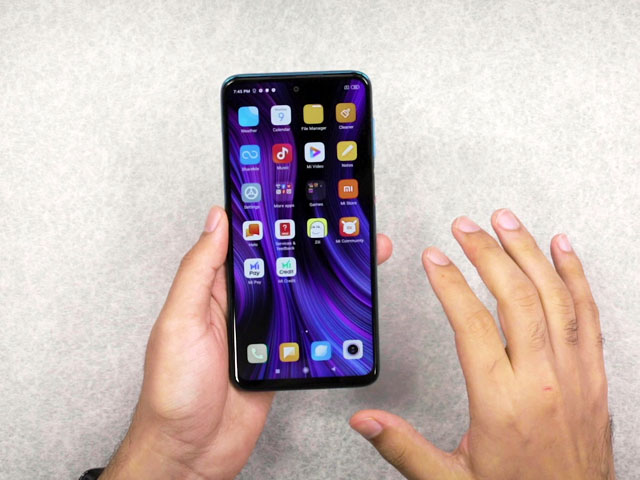
Redmi Note 9S smartphone was launched on 23rd March 2020. The phone comes with a 6.67-inch touchscreen display with a resolution of 1080x2400 pixels and an aspect ratio of 20:9.
Redmi Note 9S is powered by a 2.3GHz octa-core Qualcomm Snapdragon 720G processor. It comes with 4GB of RAM.
The Redmi Note 9S runs Android 10 and is powered by a 5020mAh battery. The Redmi Note 9S supports proprietary fast charging.
As far as the cameras are concerned, the Redmi Note 9S on the rear packs a 48-megapixel primary camera with an f/1.79 aperture; a second 8-megapixel camera; a third 5-megapixel camera and a fourth 2-megapixel camera. The rear camera setup has phase detection autofocus. It sports a 16-megapixel camera on the front for selfies.
The Redmi Note 9S runs MIUI 11 based on Android 10 and packs 64GB of inbuilt storage that can be expanded via microSD card (up to 512GB) with a dedicated slot. The Redmi Note 9S is a dual-SIM (GSM and GSM) smartphone that accepts Nano-SIM and Nano-SIM cards.
Connectivity options on the Redmi Note 9S include Wi-Fi 802.11 a/b/g/n/ac, GPS, Bluetooth v5.00, USB Type-C, Wi-Fi Direct, 3G, and 4G (with support for Band 40 used by some LTE networks in India) with active 4G on both SIM cards. Sensors on the phone include accelerometer, ambient light sensor, compass/ magnetometer, gyroscope, proximity sensor, and fingerprint sensor. The Redmi Note 9S supports face unlock.
The Redmi Note 9S measures 165.70 x 76.60 x 8.80mm (height x width x thickness) and weighs 209.00 grams. It was launched in Aurora Blue, Glacier White, and Interstellar Grey colours.

27/03/2020 01:02 par slaytane
Redmi Note 9 Pro Max smartphone was launched on 12th March 2020. The phone comes with a 6.67-inch touchscreen display with a resolution of 1080x2400 pixels and an aspect ratio of 20:9.
Redmi Note 9 Pro Max is powered by a 1.8GHz octa-core Qualcomm Snapdragon 720G processor that features 4 cores clocked at 1.8GHz and 4 cores clocked at 2.3GHz. It comes with 6GB of RAM.
The Redmi Note 9 Pro Max runs Android 10 and is powered by a 5020mAh battery.
As far as the cameras are concerned, the Redmi Note 9 Pro Max on the rear packs a 64-megapixel primary camera with an f/1.89 aperture and a pixel size of 1.6-micron; a second 8-megapixel camera with an f/2.2 aperture and a pixel size of 1.12-micron; a third 5-megapixel camera with an 1.12-micron aperture and a fourth 2-megapixel camera with an 1.75-micron aperture. The rear camera setup has autofocus. It sports a 32-megapixel camera on the front for selfies, with a 1.6-micron aperture.
The Redmi Note 9 Pro Max runs MIUI 11 based on Android 10 and packs 64GB of inbuilt storage that can be expanded via microSD card (up to 512GB) with a dedicated slot. The Redmi Note 9 Pro Max is a dual-SIM (GSM and GSM) smartphone that accepts Nano-SIM and Nano-SIM cards.
Connectivity options on the Redmi Note 9 Pro Max include Wi-Fi 802.11 a/b/g/n/ac, GPS, Bluetooth v5.00, Infrared, USB Type-C, 3G, and 4G (with support for Band 40 used by some LTE networks in India). Sensors on the phone include accelerometer, ambient light sensor, compass/ magnetometer, gyroscope, proximity sensor, and fingerprint sensor. The Redmi Note 9 Pro Max supports face unlock.
The Redmi Note 9 Pro Max measures 165.50 x 76.68 x 8.80mm (height x width x thickness) and weighs 209.00 grams. It was launched in Aurora Blue, Glacier White, and Interstellar Black colours.
As of 27th March 2020, Redmi Note 9 Pro Max price in India starts at Rs. 14,999.

27/03/2020 00:59 par slaytane
The Redmi Note 9 Pro has a lower starting price than its predecessors, but also doesn't offer all the modern features that you might expect. It has a 6.67-inch LCD screen with a 60Hz refresh rate and hole-punch front camera at the top. The processor is a Qualcomm Snapdragon 720G which is surprisingly powerful for this segment. You also get a 5020mAh battery and suppport for 18W fast charging.
The Redmi Note 9 Pro is powerful and everyday work will go smoothly. The display is large and crisp, making games and movies look good. You have a choice between variants, one with 4GB of RAM and 64GB of storage, and the other with 6GB of RAM and 128GB of storage.
The 48-megapixel primary camera was slightly disappointing overall, particularly in low light. There's also an 8-megapixel wide-angle camera, a 5-megapixel macro camera, and a 2-megapixel depth sensor. On the front you get a 16-megapixel selfie camera.