


04/04/2013 16:55 par slaytane
04/04/2013 16:55 par slaytane
xperia ZL
04/04/2013 13:41 par slaytane
-

xperia ZL
04/04/2013 13:41 par slaytane
Bikhir.ma/Petites_Annonces_Maroc

Les informations concernant la distribution du smartphone Sony Xperia ZL en Europe se précisent.
D’après des informations relayées par nos confrères du site Internet GSMArena, ce smartphone officialisé au mois de janvier dernier, à l’occasion du salon Consumer Electronic Show de Las Vegas, arriverait ainsi sur les étals courant avril.
Positionné en haut de gamme, il devrait être affiché au tarif de 599,99 euros en nu, autrement dit hors subventionnement opérateur.
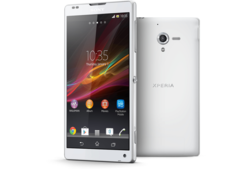
Le smartphone Sony Xperia ZL ( cliquer pour agrandir )
Côté technique, rappelons qu’il s’agit d’un terminal sous environnement Android Jelly Bean propulsé par un processeur quad-core 1,5 GHz d’origine Qualcomm et pourvu d’une mémoire vive d’une capacité de 2 Go.
Celui-ci propose un écran multitouch 5 pouces Full HD, une compatibilité 2G / 3G / 4G / Wi-Fi N, des liaisons GPS/ NFC / Bluetooth 4.0, des interfaces Micro-USB 2.0 / mini-jack, un appareil photo numérique 13 Mégapixels, une webcam 2 Mégapixels, un tuner radio FM RDS et une mémoire flash de 16 Go extensible au moyen d’une carte MicroSD.
En termes d'autonomie enfin, il laisse espérer jusqu'à 10 heures en communication et jusqu'à 500 heures en veille.
Annonces Google
-
Arab Online Dating : Find your Arab soul mate today. Search photos, email, chat and more
ArabLounge.com
Complément d'information
-
 Sony Mobile Communications, anciennement Sony Ericsson, vient d’officialiser deux smartphones qui faisaient parler d’eux depuis quelques temps : les modèles Xperia L et Xperia SP.
 -
 Présentée en janvier, la tablette Xperia Z de Sony, compatible 4G LTE, sera lancé avant mi-2013. Le smartphone du même nom est quant à lui officiellement disponible.
xperia L
04/04/2013 12:52 par slaytane
-

xperia L
04/04/2013 12:52 par slaytane
Xperia™ L
Experience Sony camera expertise in a smartphone
Xperia™ L – Every moment captured perfectly
In Kürze
Verfügbare Farben


Das Smartphone, das selbst Kameraexperten begeistert
Wenn Kameratechniker ein Smartphone entwickeln würden, was käme dabei heraus? Die Antwort ist das Xperia™ L, das Android-Smartphone, in dessen Entwicklung jahrzehntelange Erfahrung von Sony im Bereich Kameras eingeflossen ist.

Halte jeden Augenblick fest
Die Kamera wechselt in weniger als einer Sekunde vom Ruhe- in den Aufnahmemodus.
Wenig Licht?
Mit der 8 Megapixel-Kamera mit Exmor RS-Sensor lassen sich bei allen Lichtverhältnissen scharfe Fotos aufnehmen.
HDR-Helligkeit
Mit HDR für Bilder und Videos sieht dein Motiv genauso hell aus, wie du es in Erinnerung hast.

Schärfere Bilder
Deine Schneidefertigkeiten. Die neuesten Filmveröffentlichungen. Oder deine eigenen liebsten Erinnerungen. Lehn dich zurück und bewundere das 10,9 cm (4,3“) große Display deines Android-Smartphones. Die überragende Display-Qualität lässt jedes Bild heller erscheinen. Bilder sind so gestochen scharf und brillant, wie an dem Tag, an dem du sie aufgenommen hast. Unterhaltung mit Musik, Filme und Spiele wird nun noch abwechslungsreicher.

Einfache Verbindungsherstellung dank „One-touch“-Funktionen
Möchtest du deine liebsten Momente in noch größerem Format erleben? Wechsle zu deinem Fernseher zu Hause. Dank „One-Touch Mirroring“* kannst du Bilder und Filme von deinem NFC-fähigen Xperia™ L direkt auf deinem Fernseher anzeigen lassen. Mit nur einer Berührung. Und wenn die Bilder des letzten Events durchgeschaut sind, die Nacht aber noch nicht zu Ende ist, wähle einen Musiktitel aus, verbinde dein Smartphone mit einem Bluetooth-Lautsprecher und genieße einfach den Moment!
* „One-touch mirroring“ kann in Verbindung mit einem NFC-fähigen BRAVIA®-Fernseher genutzt werden.

Inhalt & Services
Es hat noch nie soviel Spaß gemacht, ein Xperia™ Smartphone zu besitzen.
Eröffne dir eine Welt der Unterhaltung und besorge dir Zugriff auf alle Bereiche – die besten Filme, die neuesten Songs und die Gaming-Welt von PlayStation – indem du ein Sony Entertainment-Konto einrichtest*.
*Sony Entertainment Network Dienste sind nicht auf allen Märkten verfügbar.

Xperia™ care. Wir haben die Antworten.
Unabhängig davon, ob du neue Software herunterladen oder dich über die neuesten Funktionen informieren möchtest – wir unterstützen dich. Hole das Beste aus deinem Smartphone heraus und erhalte Unterstützung, genau wann du sie brauchst und direkt auf deinem Bildschirm.
Xperia™ L passt ideal zu
-

Wireless Headset DR-BTN200M
Walk, talk and move to music with these wireless headphones
-

Stereo Bluetooth Headset SBH20
A wireless stereo headset for clear calling and impressive audio
-

Smart Mini-Musikbox
Bluetooth™ music streaming and call handling
nexus one
02/04/2013 13:41 par slaytane
-

nexus one
02/04/2013 13:41 par slaytane
It’s been a while since the prolific Bob Freking designed something for us, but luckily he’s back, with a very interesting concept: the HTC Nexus One 2013. Those of you who remember Android history, may know that the first Google Nexus phone was the HTC One and now we’ve got another… One.

HTC Nexus One features a 1.8 GHz Snapdragon 600 processor, a Full HD Super LCD 3 screen and an 8 megapixel Ultrapixel camera. It also adopts an all aluminum unibody case and runs Android Key Lime Pie. Bob also informed us that according to Wall Street Journal Google is feeling threatened by Samsung, that has become way too attached to Android and they have a huge market share, so they won’t leave the next Nexus phone to them.
It could go to either Motorola or HTC, but if you ask me Sony is also in the books. As you can see, this device borrows a bit from the HTC One, a bit from the One X and a bit from the LG Nexus 4. I like the rounded form factor, a bit more rounded than the HTC One and I imagine that the back has a soft touch material. Is a Nexus 2013 phone made by HTC possible?
Surface phone
02/04/2013 13:26 par slaytane
Created by Techradar, this Microsoft Surface Phone concept features some high end specs and it’s basically a smaller Surface Tablet, since it even has that cool keyboard. The device packs a 5 inch 1280 x 720 Super AMOLED+ screen and runs a hybrid between Windows Phone 8 and Windows 8.
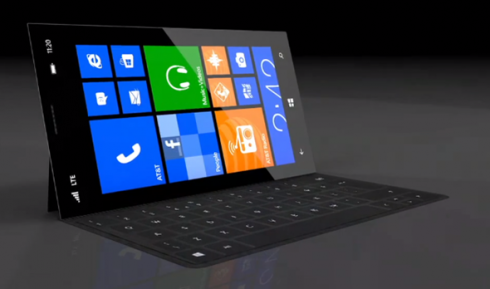
This handset has a full USB 3.0 port, a 12 megapixel camera with “ultra bright” flash and a kickass kickstand, shown in the video below. The mini touch cover here is the keyboard we were mentioned before and it certainly looks cool, although we’re not exactly sure how functional it is on a phone. If I’m allowed to speculate on other features of the device, well, it may have 2 GB of RAM, a quad core Snapdragon S4 Pro CPU, LTE, NFC and a magnesium alloy case, since we’re keeping the resemblance with the Surface tablet.
I’ve heard a rumor at some point that Windows Phone 9 will actually be a combo between Windows Phone 8 and Windows 8, so maybe this is supposed to be a WP9 flagship device. I would also add a special Skype camera on board, activated by the double press of the camera key on the device, to instantly start video chatting. How cool would that be?
Surface
02/04/2013 13:23 par slaytane
-

Surface
02/04/2013 13:23 par slaytane
Deviantart user nik255 imagined the next Windows RT already and also the first Windows tablet with a 7 inch diagonal. While people are already dreaming of bringing the phablet and 7 inch slate format to Windows/Windows Phone, the device makers are not quite there yet. Let’s see what this Microsoft Surface Companion has to offer.

As you can see, it involves a stylus, it has a back camera and it even has room at the bottom for a kickstand. It’s clearly related to the original Surface tablet and it has a nice sidebar for various notifications and messages, reminding me a lot of the same bar on the BlackBerry 10 OS. Surface Companion relies on a Qualcomm Snapdragon S4 Pro quad core 1.7 GHz processor, with Adreno 320 GPU, 4 GB of RAM and a 7.9 inch 2K display, meaning it has a resolution of 2048 x 1536 pixels. Thus, this is a Retina Display Surface tablet, if I may say so.
Just like the previous Surface tablet, this model has a case made from magnesium, the VapoMg case. It also comes with microSDXC, USB 3.0, MiniDisplayPort Video, WiFi (802.11 a/b/g/n), Bluetooth 4.0 and 2 MIMO antennae. Inside there’s a 44 WH rechargeable battery and there’s both a front and back camera on this baby. The rear one is a LifeCam with 1080p HD capture. The 7 inch Surface tablet is available in 16, 32, 64 and 128 GB storage versions and comes with a magnetic digital ink stylus, that attaches to its top.
Microsoft will also craft special technologies for this stylus. So, do you feel tempted by these goodies?
Nexus one
30/03/2013 12:10 par slaytane
It’s been a while since the prolific Bob Freking designed something for us, but luckily he’s back, with a very interesting concept: the HTC Nexus One 2013. Those of you who remember Android history, may know that the first Google Nexus phone was the HTC One and now we’ve got another… One.
HTC Nexus One features a 1.8 GHz Snapdragon 600 processor, a Full HD Super LCD 3 screen and an 8 megapixel Ultrapixel camera. It also adopts an all aluminum unibody case and runs Android Key Lime Pie. Bob also informed us that according to Wall Street Journal Google is feeling threatened by Samsung, that has become way too attached to Android and they have a huge market share, so they won’t leave the next Nexus phone to them.
It could go to either Motorola or HTC, but if you ask me Sony is also in the books. As you can see, this device borrows a bit from the HTC One, a bit from the One X and a bit from the LG Nexus 4. I like the rounded form factor, a bit more rounded than the HTC One and I imagine that the back has a soft touch material. Is a Nexus 2013 phone made by HTC possible?
M8
30/03/2013 12:07 par slaytane
-

M8
30/03/2013 12:07 par slaytane
This week HTC unveiled the HTC One smartphone, previously known as the M7, an Android Jelly Bean handset with high end features and a great design. Now Michael Retovona proposes a new HTC design, the M8 device, pictured below and packing Windows Phone 8.

The designer claims that he likes the Lumia and the iPhone 5 look, so he admits that the HTC One is a bit inspired by those. So, he went out and created the equivalent of the HTC One in the Windows Phone universe: HTC M8. Michael worked one hour and a half on this render in Photoshop alone and using vectors.
There are some changes from the HTC One, like the fact that we have speakers at the lower back, not only at the front top and bottom. Also, below the screen there are Windows Phone buttons and the front camera has been moved from the side to the center. There are 3 capacitive buttons instead of 3 and other than that the handset may keep its 4.7 inch Full HD screen and maybe even the 4 MP Ultrapixel camera. Fancy this phone?
6
30/03/2013 11:57 par slaytane
-

6
30/03/2013 11:57 par slaytane
The latest iPhone 6 design comes from Russia, courtesy of AppleInsider.ru, who also did a video of the device. We’re dealing with a thinner and lighter iPhone, that also packs a bigger display, stereo speakers and offers multiple color options.
This iPhone 6 involves a wider case than the iPhone 5 and also thinner bezels, plus a thinner case. The device measures 108.5 mm x 55.7 mm x 7.1 mm and it weighs 104 grams, which is very light. Apple is also said to use the iPad Mini screen technology to avoid page turns done by mistake via screen touches, caused by the tiny bezels. Also, notice the lack of a Home button, making the handset even more compact.
Gesture or motion controls will replace that and maybe even palm gestures. The iPhone 6 with 4.2 inch display gets to keep the same 1136 x 640 pixel resolution as the iPhone 5, keeping the developers less busy with a new resolution for their apps. Of course, in the future we’ll see a jump in res, but not right now. What’s next? A 4.8 inch iPhone obviously, with a Full HD resolution!


iWatch
30/03/2013 11:46 par slaytane
-

iWatch
30/03/2013 11:46 par slaytane
Designer Tolga Tuncer has a new vision of the Apple iWatch, as shown below. We’re dealing with a concept Apple watch, one that is able to communicate with the cloud and sync with the iPad, iPhone, iMac and MacBook easily.

The slim concept iWatch features a non touchscreen OLED display, plus a slim touchpad, an interesting idea if you ask me. Everyone is dreaming of a totally touchscreen-based watch and instead we get a slim touchpad with MP3 controls at the lower end of the body. The whole thing is 3.3 cm wide and includes several sections that are attached to a flexible bracelet body.
Powering up the device there’s a high performance solar cell and the touchpad is an aluminum one. Since we’re not dealing with a touchscreen watch, the unit is very slim and there are no smudges on the curved glass. Simplicity is something that Apple likes, but are they able to frustrate us of the much craved touch?


