

galaxy note LTE N8020
12/02/2013 14:27 par slaytane


12/02/2013 14:27 par slaytane
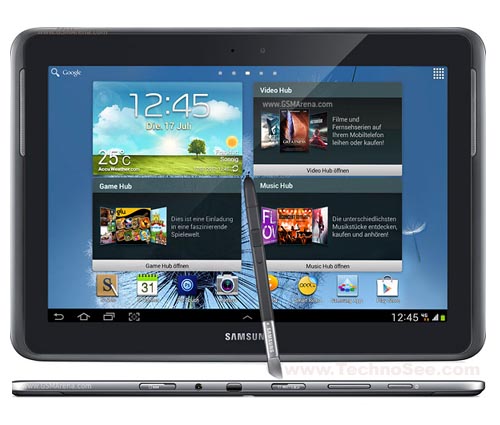
|
DIMENSIONS
|
|
|
Size
|
Height - 262.0 mm
Width - 180.0 mm
|
|
Thickness - 8.9 mm
|
|
|
Weight
|
600 grams
|
|
NETWORK
|
|
|
SIM / USB
|
SIM Support and USB Support
|
|
2G Network
|
GSM 850 / 900 / 1800 / 1900 MHz
|
|
3G Network
|
HSDPA Support
|
|
4G Network
|
LTE Support
|
|
DISPLAY
|
|
|
Screen Size
|
10.1 inches (25.6 cm), 16Million Colors Support
|
|
Pixel Density
|
800 x 1280 Pixels, (~149 ppi pixel density)
|
|
Screen Type
|
Capacitive Touch-screen
|
|
Sensors
|
Accelerometer sensor, Gyroscope Sensor,
Digital Compass
|
|
Touch
|
Multi-touch, Samsung TouchWiz UI Support
|
|
CONNECTIVITY
|
|
|
GPRS, EDGE
|
Yes
|
|
Data Speed
|
LTE, Cat3, 100 Mbps Download, 50 Mbps UL
|
|
HSDPA
|
Yes, Up to 42Mbps downloading
|
|
HSUPA
|
Yes , Up to 5.76 Mbps uploading
|
|
Bluetooth
|
Yes, Bluetooth V4.0 with A2DP
|
|
Wi-Fi
|
Yes, 802.11 b/g/n, Wi-Fi hotspot, Wi-Fi Direct
|
|
USB
|
Yes, USB v2.0 (High Speed), USB Host Support
|
|
Infrared Port
|
Yes
|
|
GPS
|
Yes, A-GPS supported
|
|
Audio Jack Support
|
3.5 mm Stereo audio Jack
|
|
TV- Out Support
|
Yes, via MHL A/V Link
|
|
MEMORY
|
|
|
Internal Memory
|
Up to 16 GB
|
|
External Memory
|
Up to 64 GB MicroSD Card
|
|
CHIPSET
|
|
|
Chipset
|
Exynos 4412 Chipset Support
|
|
CPU
|
1.4GHz Quad-core Processor(Cortex-A9)
|
|
Graphics Processing Unit
|
|
|
OPERATING SYSTEM
|
|
|
OS
|
Android Operating System
|
|
Web Browser
|
HTML5, Adobe Flash Support
|
|
CAMERA
|
|
|
Rear Camera Resolution
|
5 Megapixel, 2560 x 1920 Pixels
|
|
Focus
|
Auto Focus
|
|
LED Flash
|
Yes
|
|
Camera Features
|
Geo Tagging, Color effects, White Balance
|
|
Video Recording
|
Yes, 720p@30fps
|
|
Front Camera
|
Yes, 1.9 Megapixel Front-Facing Camera
|
|
AUDIO
|
|
|
Music Player
|
Yes
|
|
Audio Playback Formats
|
MP3, eAAC+, WAV, Flac
|
|
Loudspeaker
|
Yes, Stereo speakers
|
|
FM Radio
|
N/A
|
|
VIDEO
|
|
|
Video Player
|
Yes
|
|
Video Playback Formats
|
MP4, DivX, Xvid, FLV, MKV, H.264, H.263
|
|
Video Resolutions
|
720p@30fps HD Video Playback
|
|
Video Features
|
Video live Streaming, Video Calls
|
|
SOFTWARE & APPLICATIONS
|
|
|
Document Viewer
|
Yes, Excel, Power Point, Word, PDF
|
|
Messaging
|
SMS, MMS, Email, Push Email, IM
|
|
Email Protocol
|
POP3, SMTP, IMAP4, Exchange
|
|
Google Apps Support
|
Gmail, Google Talk, Google Search,
Google Contact Sync, Google Map
|
|
Other Applications
|
YouTube, Calendar, Picasa Integration,
Voice memo, Photoshop Touch Apps, etc…
|
|
JAVA
|
Yes, via JAVA MIDP emulator
|
|
Mobile Applications
|
Organizer, SNS integration, Voice Memo, Dial,
Predictive text input
|
|
BATTERY
|
|
|
Battery Model
|
Lithium-Ion 7000 mAh
|
|
Stand-by
|
Up to 2158 hours / Up to 1850 hours(3G)
|
|
Stand-by 3G Network
|
Up to 64 hours(2G) / Up to 43 hours(3G)
|
|
COLORS
|
|
|
Available Colors
|
White, Gray
|

12/02/2013 14:19 par slaytane

Le groupe finlandais Nokia vient d’officialiser un nouveau smartphone d’entrée de gamme tournant sous environnement Windows Phone.
Ce smartphone, c’est le modèle Lumia 505 équipé d’un processeur simple cœur 800 MHz et d’une mémoire vive de 256 Mo qui tourne sous environnement Windows Phone 7.8.
Annonçant des dimensions 11,8 x 6,1 x 1,1 centimètre pour un poids de 131 grammes, celui-ci offre un affichage AMOLED tactile multitouch 3,7 pouces avec une définition 480 x 800 pixels et un traitement contre les rayures Gorilla.
En termes de fonctionnalités, il propose une compatibilité réseau 2G / 3G / Wi-Fi N, des liaisons sans-fil Bluetooth 2.1 / GPS, des connectiques mini-jack / Micro-USB 2.0, un appareil photo numérique 8 Mégapixels et un tuner radio FM.
Pour stocker les données, on dispose d’une mémoire flash de 4 Go sans possibilité d’extension MicroSD, mais avec un espace de stockage en ligne SkyDrive gratuit de 7 Go.
À noter pour terminer une batterie Lithium-Ion 1 300 mAh avec laquelle on peut espérer jusqu’à 7 heures 15 minutes en 3G, 7 heures 30 minutes en 2G, 36 heures en lecture audio, 600 heures en veille 3G et 670 heures en veille.
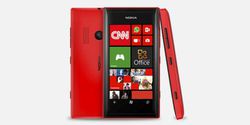
Le smartphone Nokia Lumia 505 ( cliquer pour agrandir )
La disponibilité est prévue pour janvier 2013 avec un choix parmi quatre coloris blanc, noir, rose et rouge. Pas de prix communiqué pour le moment.

12/02/2013 14:14 par slaytane
Nokia étend sa gamme Lumia sous Windows Phone 8 avec un nouveau Lumia 620 positionné sur le milieu de gamme, après les modèles Lumia 920 et 820.
Le fabricant finlandais profite de l'événement LeWeb 2012 qui se tient actuellement à Paris pour annoncer un nouveau smartphone sous Windows Phone entrant dans sa famille Lumia. Après les NokiaLumia 920 et 820 présentés à la rentrée et lancés depuis le mois de novembre 2012, c'est un Nokia Lumia 620 qui fait son apparition.
Comme l'indique sa dénomination, il se positionne plus bas en gamme que ses prédécesseurs et vient occuper le segment de milieu de gamme. Pour ce modèle, Nokia passe des couleurs primaires aux couleurs secondaires pour sa coque polycarbonate en ajoutant une seconde couche sur la couleur de base pour produire de nouveaux coloris ou des effets de transparence ou de profondeur.
Le fabricant poursuit ainsi son combat contre le concept du " rectangle noir " qui s'est imposé partout ailleurs chez ses concurrents, créant une identité spécifique pour les smartphones Windows Phone ( retrouvée chez d'autres fabricants comme HTC ) et qui rappelle les couleurs de l'écran d'accueil de Windows Phone 8.
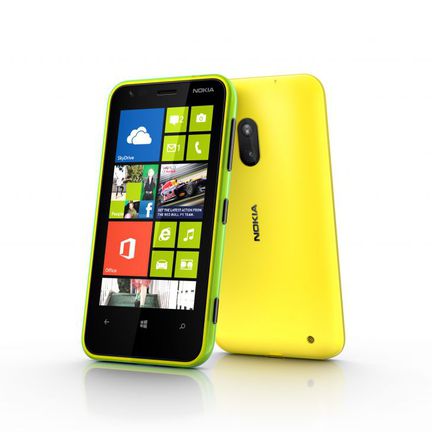
Le Nokia Lumia 620 propose un affichage 3,8" 800 x 480 pixels avec technologie ClearBlack ( contraste renforcé et noir profond ) et un processeur 1 GHz dual core SnapDragon S4 fourni par Qualcomm, associé à 512 Mo de RAM. Au dos, on trouve un APN 5 megapixels avec flash LED, autofocus et enregistrement vidéo en 720p, et un APN VGA en façade pour la visioconférence.
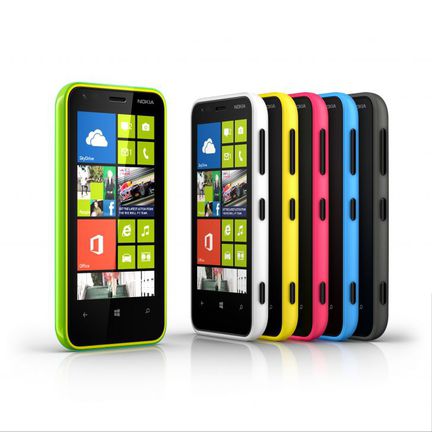
Le smartphone embarque 8 Go d'espace de stockage interne, extensible par carte microSD ( jusqu'à 63 Go ) et toujours avec 7 Go de stockage en cloud via le service SkyDrive de Microsoft. On trouvera également les connectivités sans fil WiFi, Bluetooth 3.0, GPS et un module NFC ( Near Field Communications ).
Le Nokia Lumia 620 est compatible HSPA+ 21 Mbps et disposera des services Nokia comme Nokia Maps, Nokia Drive, Nokia Transport, Nokia City Lens, Nokia Music...
Lancé d'abord en Asie puis en Europe, il sera commercialisé à partir de janvier 2013 pour un prix de 249 dollars hors taxes, et 259 € TTC dans nos contrées.
Le fabricant Nokia présente deux nouveaux terminaux d’entrée de gamme Asha : les modèles 205 et 206 sous environnement S40.
Le premier d’entre eux est un modèle de type MessengerPhone, avec un écran 2,4 pouces 65 536 couleurs en 320 x 240 pixels et un clavier physique pour la messagerie. Le tout dans un format 11,3 x 6,1 x 1,3 centimètre, pour un poids de 94 grammes. Il propose une compatibilité 2G pour deux logements Mini-SIM, un appareil photo numérique 0,3 Mégapixel, une radio FM avec RDS et fonction d’enregistrement, des interfaces Bluetooth 2.1 / mini-jack / Micro-USB 2.0, une mémoire interne de 64 Mo et une fente MicroSD / MicroSDHC. Il intègre également une batterie Lithium-Ion 1 020 mAh qui procure jusqu’à 11 heures en appel, jusqu’à 31 heures en musique et jusqu’à 891 heures en veille.
Le Nokia Asha 205 est le fruit d'une première collaboration avec le réseau social Facebook, ce qui se traduit par la présence d'une touche dédiée Facebook en façade du terminal, comme certains modèles du fabricant HTC.
Ce n'est toujours pas le Facebook Phone de la rumeur mais cela va dans le sens de l'évolution de la gamme Asha en tant que quasi-smartphones et outil de communication mobile pour le plus grand nombre. Nokia indique répondre ainsi à une tendance qui conduit les utilisateurs de la gamme Asha à être particulièrement productifs sur les réseaux sociaux.
Le second est un modèle classique qui propose un affichage 2,4 pouces en 65 536 couleurs et en 240 x 320 pixels, avec un format 11,6 x 4,9 x 1,2 centimètre pour un poids de 91 grammes. Il reprend la grande majorité des caractéristiques, à savoir le fonctionnement dual-SIM, la radio FM RDS, les interfaces Bluetooth 2.1 / mini-jack / Micro-USB 2.0, la mémoire interne de 64 Mo et le slot MicroSD / MicroSDHC. Il propose par contre un APN plus intéressant, un modèle 1,3 Mégapixel. À bord enfin, une batterie Lithium-Ion avec laquelle on peut envisager 20 heures en appel, 41 heures en audio et 680 heures en veille.
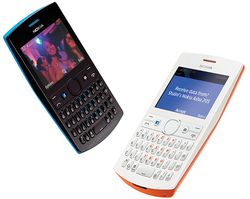
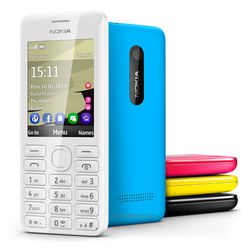
Les terminaux Nokia Asha 205 / 206 sous S40 ( cliquer pour agrandir )
Avec ces deux mobiles Asha 205 et 206, Nokia introduit une nouvelle fonctionnalité d'échange de contenus. Baptisée Slam et utilisant la connectivité sans fil Bluetooth des appareils, elle permet des échanges de photos et vidéos sans avoir besoin du système d'authentification par appairage.
Nokia indique que la fonction Slam peut fonctionner d'un Nokia Asha 205 ou 206 vers un mobile de marque différente ( hors iPhone et smartphones Windows Phone ), avec l'avantage que l'échange de fichier ne passe pas par le réseau cellulaire.
Pour les deux terminaux Asha 205 et Asha 206, on parle de 62 dollars sur le marché US, ce qui devrait donner une soixantaine d’euros dans l’Hexagone, après conversion dollar vers euro et inclusion de nos taxes.

12/02/2013 14:08 par slaytane
The Nokia Lumia 822 exists.
It feels like that needs to be said, because the midrange Lumia 820 series has been overshadowed by the big, colorful, flashy, in-your-face 920 since the launch of Windows Phone 8 a couple months ago. Heck, when Nokia announced the Lumia 820 and 920 in early September, the 820 barely got a mention — practically 100 percent of the attention was showered on the flagship model.
And after Tom Warren reviewed it recently, it starts to become clear why: the 820 is a forgettable device with a low-res WVGA display and boring design. Nokia obviously spent less time doting on it in the engineering and design phases than it did the 920, and it shows. There's just no hiding it.
SHOULD YOU PONY UP FOR THE 8X INSTEAD?
On AT&T, that makes the Lumia 920 an easy recommendation if (and only if) you're in the market for a Windows Phone from Nokia. On Verizon, though, the picture is a little murkier — the 920 isn't available, and the 820 is being offered as the slightly modified Lumia 822. Is it worth a look, or is the HTC 8X (for some $150 more on contract) the only Verizon Windows Phone worth your consideration right now?
As physical appearance goes, the 822 will garner mixed reactions. I say this because my own opinion on it flip-flops every few minutes. On the one hand, it's more sculpted than the 820 (and T-Mobile's even boxier 810), but on the other hand it doesn't diverge in a particularly stylish way. It's further hindered by the fact that Verizon opted not to offer it in any wild colors — which have become something of a Windows Phone trademark — and the fact that it's made entirely of cheap-feeling hard plastic. To be fair, the subpar materials are offset somewhat by the fact that the phone is shockingly heavy for its size: it's 3 grams heavier than the Nexus 4, 30 heavier than the iPhone 5. In fairness, heaviness can impart a sense of "solidness" and good craftsmanship, so it's a wash. But some may not like the unusual weight as much as I do.
It's also huge. Well, it's not empirically huge by modern smartphone standards, but it's huge for having just a 4.3-inch display (see HTC's superlative One S for how to do this screen size right, Nokia). Sitting next to my 4.7-inch 720p Nexus 4, for instance, the 822 is puzzlingly just as wide, nearly as tall, and actually quite a bit thicker. What's more, the unlocked 16GB Nexus 4 is $100 less than the 822, if you were to buy it unsubsidized. It's a very confusing time for smartphone economics.
THE HIGH-SENSITIVITY TOUCHSCREEN IS AWESOME
I continue to love the touch sensor's "glove mode" that I was first introduced to on the 920 — it works just as well this time around, allowing you to interact with the screen through a glove or other piece of clothing (I used my shirt sleeve for testing). The display itself is bright and colorful with exceptionally black blacks. For a while, I was thinking, "this LCD is so vibrant that it looks like an AMOLED," only to later remember that it actually *is* an AMOLED. Part of the reason I didn't figure that out sooner is the lack of PenTile subpixel configuration — it's a true RGB grid — which means you don't get those weird jagged edges on bright objects on the screen.
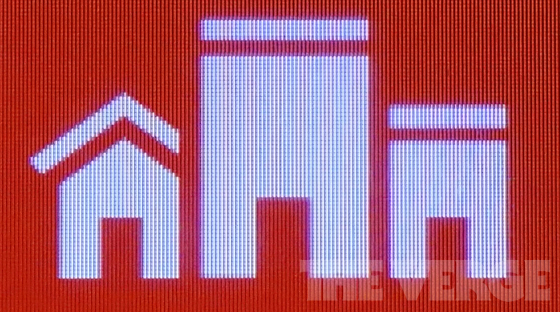
Of course, it's much easier and cheaper to avoid PenTile when you're at a low, disappointing 800 x 480 resolution. That would've been fine in a Windows Phone 7.5 world, but we're on 8 now. In some ways, the 822 is an exercise in contradictions between low-end and high-end specs, and the use of WVGA is a perfect example: just underneath the screen lie a dual-core 1.5GHz processor (the same that you'll find in the 920) and 1GB of RAM, both considered top-of-the-line just months ago. WVGA, meanwhile, has long since been supplanted. It would've been nice to see Nokia make this phone more of a mini-920 — think a modern Lumia 800 — than what it actually is, a pseudo-low-end Windows Phone that still runs $450 off contract and requires a minimum plan of $90 a month.
DECENT BATTERY, DECENT PERFORMANCE
As performance goes, I have no complaints. And really, even first-gen Windows Phones on 1GHz single-core processors did a great job of flowing smoothly, so when you throw significantly more computing power at a WVGA display as Nokia has done here, I would expect no less. Sound quality and volume were both more than acceptable (though the default ringtone is strangely gentle, soothing, and impossible to detect anywhere beyond a quiet room). In my testing, I was able to stretch the 822 across multiple days without a charge while connected to LTE. In a pure talk time test, I got six hours and 15 minutes; Nokia rates it at "up to 10.2 hours," though that's only while connected to 3G. Unfortunately, the wireless charging cover is optional for the 822 — Nokia doesn't build it in, as it does with the 920 — and it's hard to justify spending an extra $40 just to get it. If you need a charging pad, that'll run you another $50 or more.
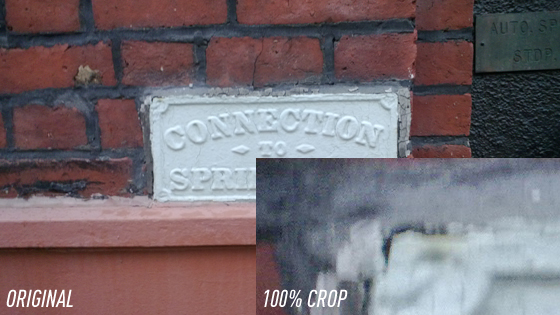
The 822's 8-megapixel lens — advertised, like most Nokias, as having Carl Zeiss optics — is middle-of-the-road. My standard verbiage for cameras like this is, "at least it's better than the Galaxy Nexus," and that's certainly true here, but that's not to say it's going to blow you away. Perhaps more importantly, it lacks the Lumia 920's almost eerie ability to light up the dark without a flash. The front-facing camera is weak (as most front-facing cameras are) — I found that it was constantly adjusting white balance while I used it, which could make video calls rather annoying for the other party. Unless they enjoy watching your face turn blue from time to time.
As with most Windows Phones, Nokia and Verizon have taken a very light approach with bundled apps here: it comes pre-installed with ESPN, My Verizon Mobile, NFL Mobile, Univision, and The Weather Channel. That's it, and they can all be uninstalled if you wish. There's also Data Sense, which is part of Windows Phone 8 itself but is only being rolled out on Verizon and other carriers who specifically green-light it — it significantly reduces the chances that a user will blow past their data limit and incur profitable coverage, so you can imagine why some networks are hesitant to allow it to be turned on.
But what exactly is Data Sense doing? Well, that's not entirely clear to the end user. The phone's description of it reads:
This feature finds more efficient ways to use cellular data and displays your usage. For example, some data will download only when you are connected to Wi-Fi.
DATA SENSE'S USE CHART SHOULD BE A STANDARD FEATURE, REGARDLESS OF CARRIER
In reality, it's a little more complex than that. It can prevent background apps from sipping data unbeknownst to you, and it can help you find Wi-Fi hotspots (amusingly, it kept offering up "attwifi" locations to me — I'm sure Verizon appreciates being able to offload its customers to AT&T's infrastructure from time to time). You can set it with a data limit that resets monthly or as a single shot that expires in a specified number of days, which is convenient for a prepaid account (or, theoretically, a prepaid SIM if you were traveling to another country and had an unlocked GSM Windows Phone with Data Sense enabled). Really, though, the most obvious feature of Data Sense to the user is that you can see your data usage in a concise chart, which should be a bog standard feature of any modern smartphone platform — Android, for example, has offered this for some time, no carrier blessing needed.
The Lumia 800, with a screen measuring just 3.7 inches, was a beautiful device intended to slot into the high end of Nokia's lineup (sales figures notwithstanding). With the possible exception of Apple, though, virtually every phone manufacturer has moved away from the notion that a smaller phone can be high-end — and that leaves us with the fat, under-designed Lumia 822 that we have today. Just imagine if Nokia had instead created a true 800 successor by scaling down the massive 920 and charging a few more dollars. I'd buy one.
Windows Phone isn't yet good enough or feature-complete enough to skimp on hardware — the app ecosystem will almost certainly improve over time, but the phone you buy today will be the same phone tomorrow. If you're going to pick up a Windows Phone 8 device this winter, make it one that rocks in as many ways as it possibly can — spend a few more dollars and get the 8X, which, despite its flaws, is unquestionably a better device than the 822. And remember that if you want wireless charging (a feature I didn't think I needed until I started to really use it), you're looking at perhaps another $100 or so beyond the price of the 822 itself for the cover and pad. Makes the $150 difference in contract price between the 822 and 8X seem a little more palatable, doesn't it?

12/02/2013 14:05 par slaytane


Les parties sombres de l'image sont rapidement bouchées, avec évidemment une déperdition de piqué. La faute en partie à un contraste élevé qui présente l'avantage d'offrir pas mal de relief et de détails à l'image, mais qui délivre dans le même temps des couleurs saturées, vives, peu fidèles à la réalité. Au niveau photo, le Lumia 820 fait mieux que son petit frère le 510. L'application Photo Intelligente proposée est dédiée à la retouche instantanée.
Un point sur l'audio, à présent. La sortie casque du Lumia 510 offre des résultats assez décevants, notamment dans les basses fréquences. Dommage car la dynamique et la puissance sonore sont bien au rendez-vous sans la moindre émission de distorsion.
Les haut-parleurs externes s'en sortent plutôt bien avec une puissance de sortie très correcte pour ce type de produit. On note malgré tout un peu de saturation à haut volume.
.jpg)

04/02/2013 12:44 par slaytane
Das Z10 ist eindeutig das neue Vorzeige-Smartphone von BlackBerry. Das Design erinnert mit seinen abgerundeten Ecken fast zwangsläufig an das iPhone 5 und wirkt nicht außergewöhnlich oder auffällig. Das Display des Z10 ist ein 4,2 Zoll großer LCD, der in HD (1.280 x 768 Pixel) auflöst. Bei der CPU setzt BlackBerry hier auf den Qualcomm MSM8960. Der S4 Plus genannte Prozessor besitzt zwei Kerne und taktet mit 1,5 GHz. Der RAM-Speicher beträgt ebenfalls 2 GByte. Intern stehen, wie im Q10, 16 GByte zur Verfügung, die mit einer microSDXC-Karte im bis zu 64 GByte erweitert werden können.
Die Kamera des Z10 löst mit 8 Megapixel auf, die Frontkamera knipst mit 2 Megapixel. Der 4G-Datenstandard LTE (1.800/2.600/900/700) steht ebenso wie HSPA, WLAN-a und Bluetooth 4.0 bereit. Das Z10 ist in England bereits erhältlich, ab März soll es auch in Deutschland verfügbar sein.
CHIP Online meint:
Die Highlights der BlackBerry-Keynote waren definitiv nicht die Smartphones. Zwar sind Z10 und Q10 schöne und gut ausgestattete Geräte. Der Fokus liegt aber auf dem neuen Betriebssystem. Die entscheidende Frage ist: Wie arbeiten Akku und CPU mit dem brandneuen OS zusammen? Läuft das Z10 gut, so könnte das LTE-Handy mit seinem frischen System ein Erfolg werden. Das Q10 sehen wir gerade in Deutschland eher als Nischen-Produkt. (bh)
 |
 BlackBerry Q10 und Z10 - Herstellerangaben im Überblick |
 |
||||||||||||||||||||||||||||||||||||||||||||||||||||||
|
||||||||||||||||||||||||||||||||||||||||||||||||||||||||
 |
|
 |
||||||||||||||||||||||||||||||||||||||||||||||||||||||

04/02/2013 12:27 par slaytane

Si le BlackBerry Z10 est le premier smartphone BlackBerry 10 à être commercialisé, il sera rapidement suivi d'un modèle BlackBerry Q10 qui renoue avec la tradition du clavier en façade.
Avec le lancement officiel de BlackBerry 10, le fabricant BlackBerry (puisqu'il abandonne son ancien nom Research in Motion ) annonce ses premiers smartphones, qui avaient largement été décortiqués ces derniers mois, entre rumeurs sur leurs caractéristiques et clichés officieux.
Le smartphone BlackBerry Z10 est le premier à être lancé et offre une configuration tout tactile. Un autre modèle suivra dans les mois qui suivent : le BlackBerry Q10, avec cette fois un clavier présent en façade, rappelant les fondamentaux des smartphones BlackBerry.
Orienté plus bas en gamme que le Z10, le BlackBerry Q10 propose un affichage tactile 3,1" carré de résolution 720 x 720 pixels, comme au bon vieux temps des PDA / PDAPhone, et avec une densité de 328 ppi.
Comme vu sur les photos officieuses, il ne comporte plus de touches de commandes, l'écran rejoignant directement le clavier dont la disposition est rectiligne et abandonne la disposition incurvé des derniers modèles de BlackBerry.
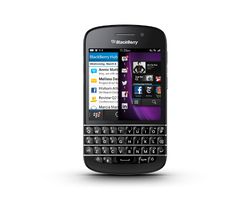
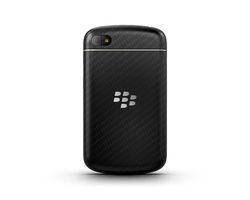
Une partie de la gestion de BlackBerry se fait par des gestuelles tactiles directement sur l'écran, rendant les touches physiques inutiles, sans compter la présence d'un assistant vocal au sein de la plate-forme. Le BlackBerry Q10 propose également un APN 8 megapixels au dos avec enregistrement vidéo en 1080p, tandis qu'un APN 2 megapixels en façade permettra d'utiliser la nouvelle fonction vidéo de BlackBerry Messenger.
Ce smartphone exploite comme le BlackBerry Z10 un processeur dual core 1,5 GHz associé à 2 Go de RAM et proposera aussi une compatibilité 3G+ / LTE. Lors de la présentation de BlackBerry 10, il a été évoqué le mois d'avril 2013 pour sa commercialisation.

31/01/2013 13:37 par slaytane
Sony packt beim adretten Google-Smartphone Xperia S einige Pixel drauf, sowohl bei der 12-Megapixel-Kamera als auch beim HD-Screen. Eine scharfe Sache, die gefällt und für Spaß sorgt. Im Test zeigte das Sony-Smartphone jedoch auch leicht diffuse Seiten.

Fangen wir doch gleich mal bei den Basics an: Das Xperia S eignet sich hervorragend zum Telefonieren. Im Test protokollieren die Gesprächspartner einen sauberen Klang mit präsenten Stimmen. Nur ein minimales Rauschen ist in der Leitung zu hören. Vom Telefonieren zum Surfen: Web-Browsen per WLAN-n und HSPA zählt zum Standard bei einem Handy dieser Klasse. Die praktische Umsetzung gelingt gut: Das Sony-Smartphone baut unsere 600 KByte große Test-Webseite via Mobilfunk in fünf Sekunden auf, per WLAN geht es sogar fast doppelt so schnell.
Der klare 4,3 Zoll große HD-Touchscreen ist ein Augenschmaus. Die scharfe Anzeige schmeichelt den Augen schon beim ersten Anschalten des Xperia S. Im Messlabor gab es keine Ausreißer in Sachen Display-Qualität: guter Kontrast, ausreichend Helligkeit. Was ebenfalls ins Auge sticht, ist die durchsichtige Leiste unterhalb des Displays, die bei eingehenden Anrufen leuchtet, aber für die Menüsteuerung keine Funktion hat. Zwischen Leiste und Display verstecken sich letztendlich die dafür passenden drei Sensortasten. Das ist schön, aber sehr gewöhnungsbedürftig: Denn im Test mussten wir die Touch-Tasten teils mehrfach betätigen, bis das Handy reagierte - das nervt mit der Zeit. Nur mit reichlich Fingergefühl klappt’s gut.
Foto satt
Wie HTC und Nokia setzt auch Sony bei seinem neuen Flaggschiff den Fokus auf die Kamera. Eine echte Auslösetaste, der Kamerastart direkt aus dem Ruhemodus des Handys heraus, ein guter Autofokus, zig Optionen zur Aufnahmeart und Feinjustierung der Bildqualität, Moduswechsel zum Video-Dreh in Full-HD-Qualität – das sind die umfangreichen und oft praktischen Features der 12-Megapixel-Kamera. In der Praxis aber am Wichtigsten: Sie schießt ansehnliche Fotos. Besonders die Tageslichtaufnahmen siehe Fotostrecke sowie die Videos erwiesen sich als scharf und farbrealistisch.
Allerdings wäre ein zweites Fotolicht für ein auf Fotos getrimmtes Handy angebracht. Eine zweite LED-Leuchte würde Nachtaufnahmen deutlich besser ins Licht rücken. Dazu überzeugte uns der Exmor-R-Sensor beim Xperia S nicht. Damit kokettierte der Hersteller schon bei anderen Xperia-Smartphones wie beim arc, das Sony noch mit dem Ex-Partner Ericsson auf die Beine stellte. Der Sensor sorgt neben satteren Farben angeblich auch für ein geringeres Bildrauschen bei schlechteren Lichtverhältnissen. Das können wir nach unseren Tests jedoch nicht bestätigen.
Bitte mehr Akku-Power!
Beim Speicher müssen Sie Kompromisse eingehen, da er nicht erweiterbar ist. Von 32 GByte stehen rund 26 GByte ab Handy-Kauf zur freien Verfügung. Für viele Nutzer sollte dies in der Regel ausreichen. Dennoch wäre es begrüßenswert, wenn die Nutzer via microSD-Slot nachrüsten könnten. Mit seinen Akku-Laufzeiten von 5:25 Stunden im Online-Test bei Display mit maximaler Helligkeit und 4:44 Stunden im Sprechtest bei voller GSM-Sendeleistung sorgte das Xperia S für wirklich enttäuschte Gesichter. Ein Zweitakku zum Wechseln kommt beim Xperia S nicht in Frage. Grund: Der Stromspender ist hier fest verbaut.
Dass Sony nicht ab Werk das neue OS mit gereifter Oberfläche im Xperia S unterbringt, sondern den Nutzer erst noch eine Warteschleife von einigen Wochen schickt, ist bedauerlich. Mit der brandneuen Android-Version gleich unter der Haube würde die Premiere von Sony ganz ohne Ericsson für mehr Aufmerksamkeit sorgen. Immerhin: Die aktuell untergebrachte Version Android 2.3.7 mit der darauf gepackten Sony-Nutzeroberfläche bietet eine effektive Bedienung mit vielen Optionen. Der auf 1,5 GHz getaktete Dualcore-Prozessor sorgt für eine durchweg flüssige Performance.
|
Fazit: Cooler Entertainer Das Sony Xperia S ab rund 480 Euro ohne Vertrag ist ein elegantes Multimedia-Smartphone mit einer besonders bei Tageslicht leistungsstarken Kamera und einem tollen Musik-Player. Der scharfe und große Touchscreen setzt Menü, Bilder, Videos prima in Szene und macht viel Spaß. Bei den Basics glänzt das Xperia S mit feiner Sprachqualität, patzt aber mit mäßiger Akkulaufzeit. Dass Sony das neue Android 4.0 für sein neues Spitzen-Phone erst in einigen Wochen als Update nachliefert, ist ein weiterer Kritikpunkt. Alternative Das HTC Sensation XE bekommt das Update auf Android 4.0 früher, denn der Hersteller hat die Aktualisierung bereits global ausgerollt. Aber nicht nur wegen der neueren Android-Version kommt es als Alternative für das Xperia S in Frage. Das auf Musik gebürstete Handy wusste im Test auch als Kamera-Handy zu gefallen und bringt einen Slot für Speicherkarten mit. Die derzeitige Nummer sechs in unserer Handy-Bestenliste hat mit rund 440 Euro ohne Vertrag aber auch ihren Preis. (Stand: 13.3.2012) |
|
|
|
|
Sony Xperia S |
|
| Handbuch | Zum Download |
| SAR-Wert | 1,30 W/kg |
| Getestet mit | Android 2.3.7 mit Sony UI |
| App-Store-Anbindung | Google Play |
| Akku: Sprechzeit | 4:44 Stunden |
| Akku: Online-Laufzeit | 5:25 Stunden |
| Akku: Lade-Dauer | 2:20 Stunden |
| Gewicht | 145 Gramm |
| Abmessungen | 129 x 65 x 11 mm |
| GSM-Frequenzbänder | Quad-Band |
| WLAN | 802.11n/g/b |
| EDGE | ja |
| UMTS: Daten empfangen | 14,0 MBit/s |
| UMTS: Daten versenden | 5,8 MBit/s |
| Web-Browser beherrscht Flash | Ja |
| Videotelefon | WLAN und UMTS |
| Touchscreen | Kapazitiv (mit Multitouch) |
| Touchscreen: Reaktionsfreudigkeit | sehr gut |
| Display: Typ | LCD/TFT |
| Display: Abmessungen | 53 x 96 mm (4,3 Zoll) |
| Display: Auflösung | 720 x 1280 Pixel |
| Display: Farbanzahl | 16.777.216 Farben |
| Display: Reflektions-Kontrast | 5,0:1 |
| Display: Helligkeit bei Umgebungslicht | 482 cd/m² |
| Display: Schachbrett-Kontrast | 134:1 |
| Sprachaufnahme | - |
| Profile | ja |
| Push-E-Mail | ja |
| E-Mail per Exchange | ja |
| Speicher | 25.999 MByte |
| Speicherkarten-Slot | - |
| USB-Version | USB 2.0 |
| USB-Buchse | Micro-USB-Buchse |
| USB: Zeit für Übertragung von 100 MByte | 27 s |
| SIM-Slot | für Micro-SIM |
| Bluetooth | 2.1 EDR (mit A2DP) |
| Kamera: Auflösung | 12,0 Megapixel |
| Kamera: Mindestabstand Makro | 6 cm |
| Kamera: Autofokus | ja |
| Camcorder-Auflösung | 1.080 x 1.920 Pixel |
| TV-Ausgang | microHDMI |
| Musik-Player: Formate | MP3, AAC |
| Kopfhörer-Ausgang | 3,5 mm |
| Video-Player | ja |
| UKW-Radio | Mit RDS |
| Navi: GPS-Empänger | ja |
| Navi: Software | vorinstalliert |
| Navi: Vollversion | Vollversion |
| Navi: Software-Typ | Offboard (Google Maps) |
| Navi: Landkarten | Offboard |
| Navi: GPS-Fix | 10 Sekunden |
| Lieferumfang | USB-Kabel, In-Ear-Headset, Bedienungsanleitung auf CD/Speicherkarte |


31/01/2013 13:30 par slaytane
La famille Xperia passe à la 4G avec le nouveau smartphone Xperia Ion de Sony présenté au salon CES 2012 de Las Vegas et distribué par l'opérateur AT&T.
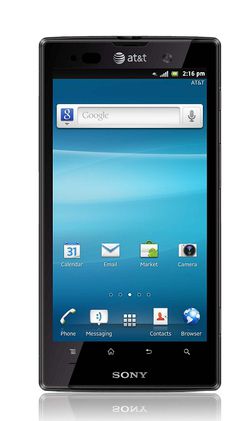 Dans la famille Xperia, désormais avec Sony mais sans Ericsson, le Sony Xperia Ion, annoncé au salon CES 2012, est le premier à proposer une compatibilité 4G LTE ( Long Term Evolution ). Doté d'un affichage 4,6" 1280 x 720 pixels ( 720p ) toujours avec la technologie Bravia Engine de Sony, il embarque un processeur dual core 1,5 GHz et propose 16 Go d'espace de stockage.
Au dos, on trouve un APN 12 megapixels avec capteur Exmor R de Sony et possibilité d'enregistrement vidéo 1080p, ainsi qu'un APN secondaire en façade pour la visioconférence, lui-même pouvant enregistrer en qualité HD 720p.
Le Sony Xperia Ion est aussi un smartphone sous Android 2.3 Gingerbread qui passera ultérieurement à Android 4.0 Ice Cream Sandwich et profite à ce titre des services mobiles de Google et de l'accès au portail Android Market.
Il bénéficie aussi de la certification PlayStation qui permet de piocher dans le catalogue PlayStation Store de Sony. Le Xperia Ion peut en outre accéder aux services de distribution de musique et de films ( Sony Entertainment Network ) mis en place par le groupe japonais.
Compatible HSPA et LTE, il sera distribué aux Etats-Unis en exclusivité chez l'opérateur AT&T pour son nouveau réseau mobile.


