
Note 2 plus
21/12/2012 21:08 par slaytane


21/12/2012 21:08 par slaytane
Designer Ben Ling proposes a very slight update to the Galaxy Note II, that is supposed to hit the USA stores soon. He imagined the Samsung Galaxy Note II Plus, a device that keeps about 80% of the specs of the predecessor and adds minor changes. One of them is replacing the physical Home button with a touch one and another is making the device less elongated, from what I can see.
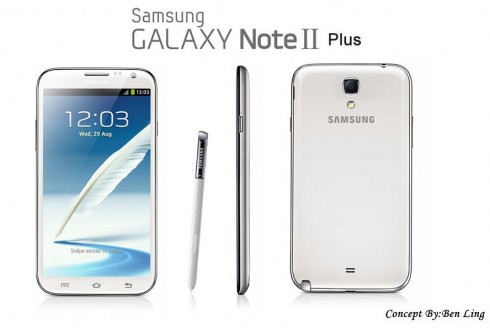
We’re still dealing with a 5.5 inch phablet with a Super AMOLED TFT display and Corning Gorilla Glass 2 protection. The screen here supports a 720p resolution and on board we find a quad core 1.7 GHz Exynos 4412 processor, as well as a Mali 400 MP GPU. The OS of choice is Android 4.1.1. Jelly Bean with the promise of updating to Android 4.2 ASAP. TouchWiz is applied on top of the OS and at the back of the device we find a 12 megapixel camera with LED flash and 16x digital zoom.
The camera is capable of 1080p HD video recording and there’s also a front 2 megapixel camera, with 1080p capture as well. Inside the phablet we find a Li-Ion 3300 mAh battery and other features available include 16/32/64 GB of storage, 2 GB of RAM, NFC and Bluetooth 4.0. The S Pen stylus is kept and the thickness of the device is 9.3 mm. Would you buy a Note II with these small upgrades?

21/12/2012 21:06 par slaytane
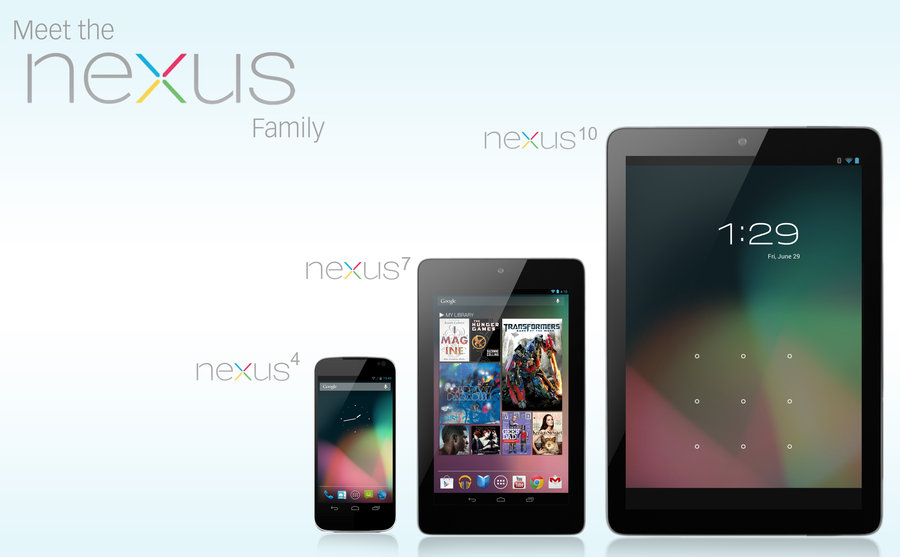
The Nexus 10 tablet has been in the rumors for a while now and leaks are becoming more and more detailed. Some specs have leaked online and before we get a press picture of the device there are some mockups of the 10 inch Nexus tablet I’d like to show you. They’re made by Deviantart user CapuchinoMedia, who imagined the fresh family of Nexus devices.
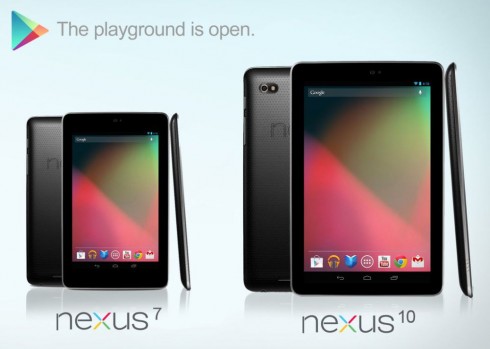
At the bottom we have the LG Nexus 4, the smallest of the gang, then the Nexus 7 and finally the Nexus 10, that seems to adopt the same industrial design as the Nexus 7. From what I’ve heard the new model will be made by Samsung and it may end up looking like the Galaxy Tab 2 10.1 and a bit like the Galaxy Note 10.1. Rumored specs include a dual core Cortex A15 processor, 2 GB of RAM, 16 GB of storage and a crazy good 2560 x 1600 pixel resolution, courtesy of Samsung technology.
At the back there should be a 5 megapixel camera and other usual features include NFC, WiFi, dual speakers at the front and a front facing camera. The OS here will most likely be Android 4.2, just like on the LG Nexus 4. Hopefully the model will be reasonably priced, although that’s pretty hard with such strong hardware. Tomorrow we’ll be back with some leaked pics of the Nexus 10 tablet, but till then you have these mockups. Do you like them?



21/12/2012 21:02 par slaytane
Who other than Bob Freking can imagine the future flagship Samsung tablet? The designer claims that the Galaxy Note isn’t for everyone and nor is the Galaxy Note 10.1. So, this is where the Galaxy Tab III comes in, born from the need of the people to get the pure Galaxy Tab experience, without stylus action and all that… Here’s the device, with a pebble blue case:
This Samsung Galaxy Tab concept tablet features a 10.1 inch display with a 2560 x 1440 pixel resolution, a panel that Sammy has been rumored to be making for a while now. Inside we find a Cortex A15 Exynos 5 processor made by Samsung itself and promoted as the most potent CPU on the market, which is true. Gorilla Glass II is used here and the Galaxy S III Pebble Blue case, but in a bigger version. 2 GB of RAM, 32 GB of storage and expandable memory complete the picture.
TouchWiz Nature UX is applied on top of Android 4.1 Jelly Bean and the device features a combo of 8 megapixel back camera and 1.9 MP cam at the front. The selling point of the device is the weight and waistline, only 500 grams and 8 mm respectively, making this one of the lightest and thinnest tablets ever. The cool thing is that the Galaxy Tab III is not made of plastic but rather made using super light aircraft metal like the Series 9 laptop line. Another appealing feature is the 15,000 mAh battery on board. Samsung is also supposed to be promising to keep the software update to date this time via OTA… Fancy this tablet?

21/12/2012 20:54 par slaytane
We have heard of pens being phones before, but the idea of pulling a phone’s flexible display from a pen seems new, or is it? Let’s have a look at this Sony PlayStation concept phone and remember it. Anyway, today we have a new step in design evolution, the Samsung ONE, created by Yejin Jeon. This handset is basically a flexible display mobile phone hidden inside an elegant, white pen.
The Samsung concept relies on cloud computing and involves a wide screen display that comes out of the pen. This screen is a 6 inch bendable sheet and at the edge of the pen we also have an embedded camera. You can make ONE stand in order to use the 6 inches of screen estate to their full extent. When the display is inside the pen there’s a small touchscreen on the side of the pen, as shown in the image below. This one allows you to control the device and has the role of showing notifications, signal, battery and more.
There’s a speaker at the edge of the device and a lock at the other. The brilliant thing about this device is that you can pull part of the flexible screen of the ONE and use it as a camera viewfinder when you turn the handset’s camera on, that’s very, very cool. I say that such a product is doable with today’s technology, but it could end up being much thicker. This design is part of the iF Design Talents competition and I already give it a big thumbs up.


21/12/2012 20:50 par slaytane
Aneek from Sri Lanka sent us his idea of a concept phone, the Samsung Captivate X, shown below. We’re dealing here with the follow-up of the Samsung Captivate, so we might as well call it the Captivate 2. It features a 4.3 inch screen and it enhances the camera, processor and screen of the predecessor.
Samsung Captive X is Aneek’s dream phone and it comes with a 4.3 inch 1280 x 720 pixel display, a 1.5 GHz dual core Amlogic CPU and an 8 megapixel camera at the back with 1080p capture. There’s also a 2MP front camera with videocall support. Android 4.1 Jelly Bean is the OS of choice here and other specs include 1.5GB of RAM, 16GB of internal storage and an 8.5mm thick chassis. Samsung Captivate X has 4 capacitive buttons below the display, in spite of Android 4.0+ devices usually having 3.
This model has a pretty interesting design, with a curved lower side and a rectangular case on all the other edges. The upper part of the phone has a slight BlackBerry feeling to it, don’t you think?

17/12/2012 02:03 par slaytane


17/12/2012 01:59 par slaytane


17/12/2012 01:55 par slaytane

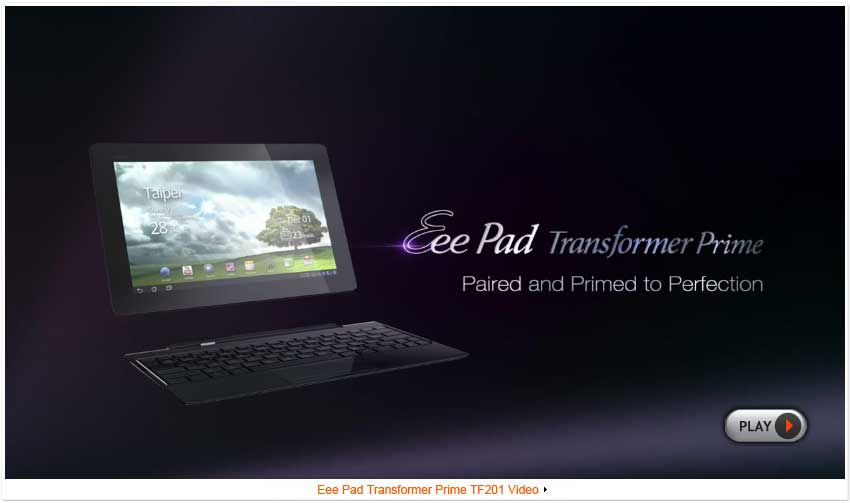
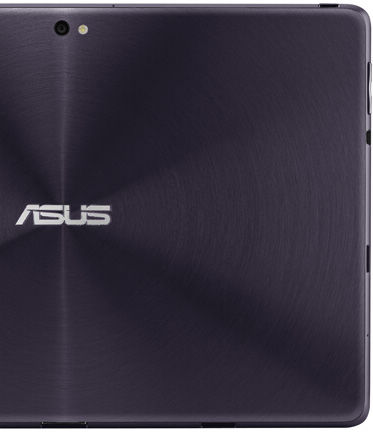
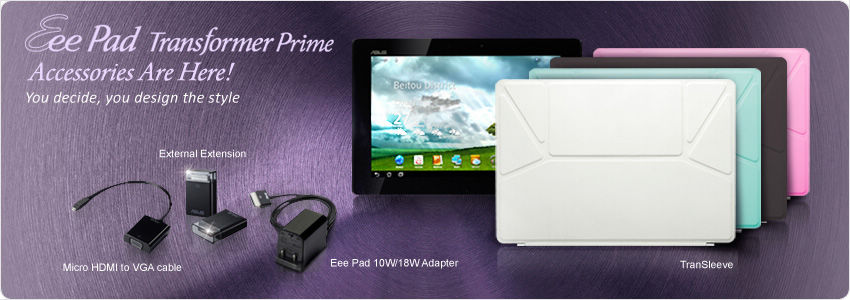
The metallic spun finish on the ultra-slim and light Transformer Prime sets a new benchmark in the art of tablet design. Only 8.3mm thin and 586g light, the Transformer Prime re-defines the rule of the mobile life, making it super easy to carry and transport.


The Transformer Prime is equipped with the most advanced CMOS sensor and a large aperture design to ensure sufficient light exposure and the ability to defocus the background and put emphasis on the object, making your photos bright and clear. 
With the high speed auto-focus and color enhancement design, the Transformer Prime can capture a clear and vivid image.
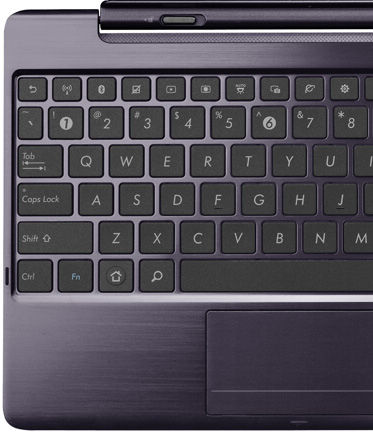
Tuned by the ASUS Golden ears team, audio on the Transformer Prime is delivered with the most precise processing protocols and codecs, superior speaker construction and large resonance chambers for unforgettable audio enjoyment.

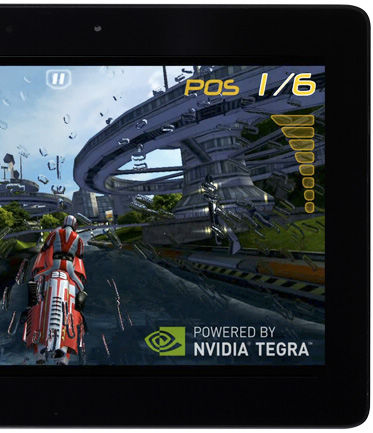
Advanced water effects, realistic textures and material display, motion blur effects, camera splash effects and all kinds of new 3D effects have been added to the Transformer Prime. It offers superb 3D graphics performance previously unseen on a tablet.

Over 500,000 apps are available on the Android™ Market to compliment your tablet experience. You also have access to various social networks such as Facebook and Twitter.
When traveling for an extended amount of time, users can turn on "Power Saving Mode" to extend the battery life even more.
An IPS panel made from durable and scratch-resistant Corning® Gorilla® glass is viewable at angles up to 178°, producing a crisper and more accurate color range.
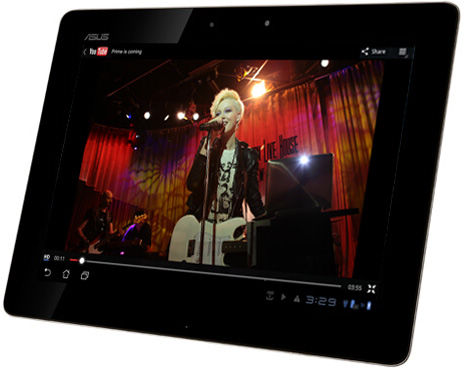


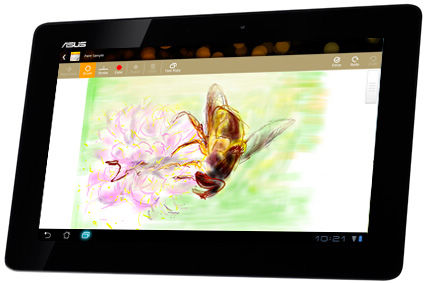


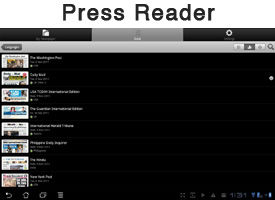


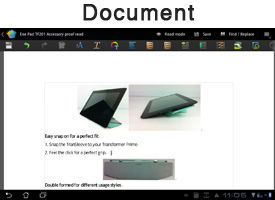
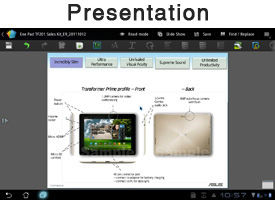
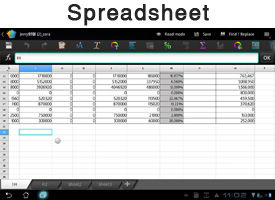

Android™ 4.0 Ice Cream Sandwich is a revolutionary operating system specially designed and optimized for tablets, and enables users a full web experience for on-the-go web browsing, communicating and casual computing. Supporting Adobe® Flash® and the ever growing Android™ Market, entertainment is a finger swipe away.
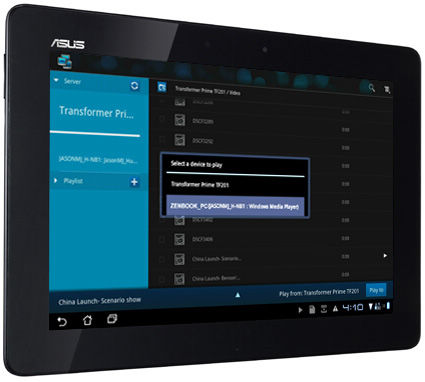
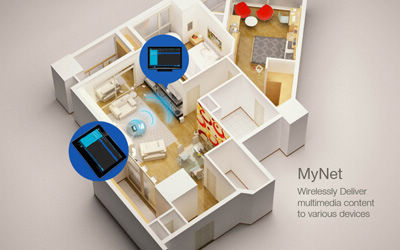
The convenient ASUS Launcher also allows users to easily launch software, manage content and access online services and connect devices with a few simple taps.
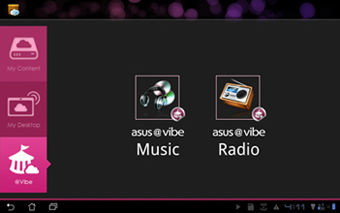
MyCloud is a total cloud solution, providing access to digital content such as music, videos, and files from the cloud. Users can even use MyCloud to remotely access and control PC or Mac systems, which further extends the versatility of the Eee Pad Transformer Prime.


Au salon MWC 2012 en février, Asus avait fait sensation avec son Padfone, smartphone s'intégrant dans une tablette. Le concept revient avec le Padfone 2 dans une version affinée
En quête de nouvelles idées anticipant les besoins de demain en termes de produits nomades, le taiwanais Asus avait dévoilé au salon MWC 2012 de Barcelone son Padfone, un smartphone Android pouvant servir de " coeur communicant " une fois glissé au dos d'une tablette qui peut elle-même accueillir un dock/clavier, l'ensemble formant un quasi-PC.
Le Padfone, initialement prévu pour le mois d'avril 2012, a finalement mis beaucoup plus de temps pour être commercialisé et voici déjà venir son successeur, l'Asus Padfone 2, qui reprend la même idée en y apportant un certain nombre d'améliorations.
Le Padfone 2 est donc à la base un smartphone Android doté d'un affichage 4,7" avec dalle IPS et résolution 720p ( 1280 x 720 pixels ), accompagné d'un processeur 13 megapixels et embarquant un processeur quadcore SnapDragon S4 1,5 GHz ( APQ8064 ) de Qualcomm avec 2 Go de RAM ( contre un processeur dual core, également de la famille SnapDragon S4, pour le premier Padfone ).
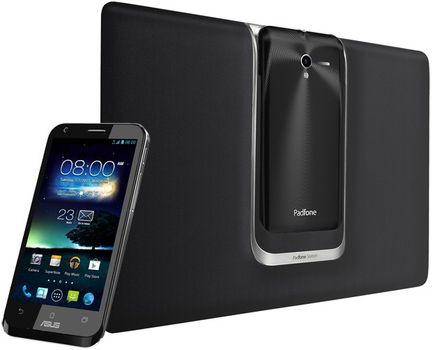
Et comme son prédécesseur, il pourra être glissé dans une tablette 10,1" 1280 x 800 pixels, la Padfone 2 Station, dont l'épaisseur et le poids ( 650 g ) ont été réduits par rapport à la précédente version. Le mécanisme d'insertion du smartphone a également été revu, abandonnant le dispositif avec capot pour un système à glissières sans doute moins fragile. En revanche, la partie clavier du Padfone initial a été abandonnée.
D'une batterie 2140 mAh embarquée dans le Padfone 2 et assurant 16 heures d'autonomie en conversation 3G et 13 heures en usage WiFi, le couple Padfone 2 / Padfone 2 Station atteint les 36 heures d'autonomie en conversation 3G grâce à la batterie 5000 mAh intégrée dans la tablette.
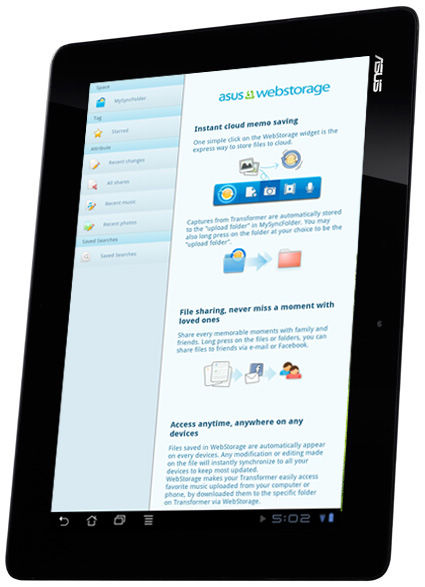
Le smartphone embarque en outre un module NFC et est compatible 4G LTE, tandis que le stockage ira de 32 à 64 Go en interne, auquel on pourra ajouter 50 Go en cloud via le service Asus WebStorage. Les données entre le smartphone et la tablette sont synchronisées lorsque les deux appareils sont connectés.
La commercialisation du Padfone 2 et de la Padfone 2 Station est prévue d'ici la fin du mois de décembre 2012 sur plusieurs marchés en Europe ( mais pas en France, qui devra sans doute attendre un lancement début 2013 ). Le couple smartphone / tablette en version 32 Go sera proposé pour 799 € tandis que la version 64 Go coûtera 899 €.

17/12/2012 01:36 par slaytane
La Asus EeePAD Transformer TF101 c'est le résultat de l'hybridation de la tablette et du netbook avec un vrai potentiel pour devenir un nouveau format.

Avec la EeePAD Transformer TF101 Asus joue sur 2 tableaux que tout le monde s'accorde pourtant à soigneusement distinguer : Le monde des netbooks d'abord avec des engins compacts disposant d'une interface classique avec clavier et pavé tactile. Le monde des tablettes qui émerge cette année. La Transformer c'est le résultat de l'hybridation de ces 2 univers avec une maîtrise étonnante et un vrai potentiel pour devenir un nouveau format.
L'idée n'est pas nouvelle et le jeu est donc assez dangereux pour Asus. On en a déjà vu des mix inter-machines qui promettaient le meilleur des deux mondes et malheureusement la plupart de ces hybrides n'ont pas eu grand effet sur les résultats financiers des marques qui les promulguaient "solution d'avenir". Si ces engins n'ont pas rencontré leur public ce n'est pas par peur de l’innovation mais bien parce que derrière un joli discours marketing se cache souvent une efficacité et une ergonomie médiocres. Le pari d'Asus est de proposer non pas une machine "universelle" mais de présenter la TF101 comme une tablette identique au reste de l'offre du marché sur laquelle on pourrait greffer un clavier. La Transformer c'est avant tout un modèle très standard, une tablette Android 3.0 comme les autres, mais extensible à un mode plus productif par l'intermédiaire d'un simple dock.

Asus EeePAD Transformer TF101

L'EeePAD Transformer si ce n'est pas déjà un mythe, c'est déjà l'objet qui cristallise beaucoup d'attentes dans le petit public qui s’intéresse à ce marché des tablettes tactiles Android. Un écran tactile c'est bien, c'est amusant et c'est tendance mais cela ampute l'utilisateur d'une grosse partie de son potentiel de créativité et de production. Asus propose donc un engin mixte, un engin qui ressemble autant à une tablette qu'à un netbook et à vrai dire la principale inconnue de la machine ne vient pas vraiment de son équipement ni de sa finition mais plutôt de la pertinence du système d'exploitation embarqué.
Potentiellement, Asus a là une machine qui pourrait prendre la place de 3 autres : La tablette tactile, actuellement mise à l'honneur depuis l’avènement de l'iPad. Le netbook, ce précieux compagnon de travail et de loisir au quotidien. Et enfin le jukebox numérique qui orne de plus en plus de salons.