
Asha 305/306/311
05/07/2012 01:22 par slaytane


05/07/2012 01:22 par slaytane
Nokia étoffe sa gamme Asha de mobiles sous interface Series 40 à petit prix et met en avant leur polyvalence.
Chez Nokia, il y a la gamme Lumia sous Windows Phone du côté des smartphones et la gamme Asha sous interface Series 40 pour les mobiles traditionnels. Cette seconde catégorie, inaugurée en octobre 2011, fait partie de la stratégie visant à connecter le prochain milliard d'utilisateurs en proposant de nombreux services.
Trois nouveaux modèles intègrent cette gamme qui compte une dizaine de modèles distribués dans plus de 130 pays et mettent l'accent sur les services et fonctionnalités, ainsi que sur la couleur, pour séduire une cible jeune amatrice de réseaux sociaux et de jeux mobiles.
Ils font notamment appel au navigateur Nokia 2.0 et son système de compression de données avant distribution sur les mobiles, perdant de réduire la consommation data et d'accélérer l'affichage des pages Web.
Il est possible de télécharger des applications ( Java ) sur ces terminaux et Nokia en profite pour souligner que le Nokia Store vient de passer la barre des 5 milliards de téléchargements, dont 42% du contenu téléchargé concerne des mobiles Nokia Asha et d'autres mobiles Nokia supportant Java, du fait notamment d'une bonne présence sur les marchés émergents.
Le Nokia Asha 311 embarque un affichage 3" 240 x 320 pixels tactile capacitif et polarisé pour une bonne lisibilité en extérieur, avec 100 Mo de mémoire interne utilisable et un port microSD acceptant jusqu'à 32 Go d'espace de stockage.
Il profite d'un processeur 1 GHz et d'un APN 3,2 megapixels au dos, et embarque la connectivité sans fil WiFi ainsi que la Radio FM. A bord, on trouve l'application Nokia Cartes et divers jeux pré-installés, dont 15 niveaux du jeu Angry Birds.
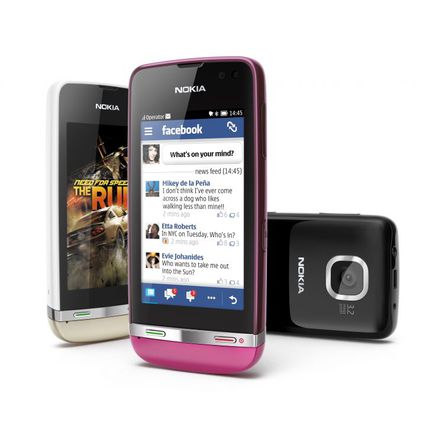
Côté autonomie, pour ce mobile 3G, on profitera de 7h20 en conversation et 29 jours en veille. Le Nokia Asha 311 est commercialisé au prix de 139 € TTC nu.
Les Nokia Asha 305 et 306 sont très proches en terme de design et de fonctionnalités. Le Nokia Asha 305 profite d'un double emplacement SIM avec système Easy Swap facilitant l'échange de carte SIM. Il possède lui aussi un affichage 3" tactile 320 x 240 pixels.
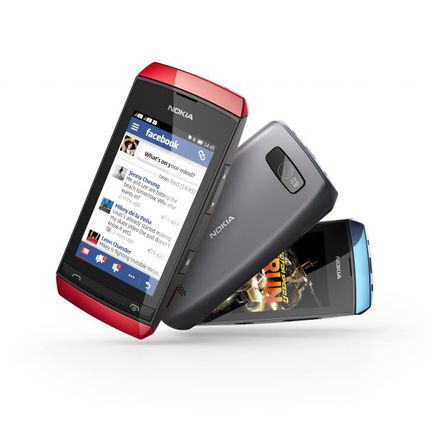
Au dos, on trouve un APN 2 megapixels et à bord le logiciel Nokia Maps. Ce modèle est dépourvu de connectivité sans fil WiFi mais dispose du Bluetooth et de la Radio FM. Ce téléphone GSM / EDGE bibande offre jusqu'à 14 heures d'autonomie en conversation et 22 jours en veille. Le Nokia Asha 305 est commercialisé au prix de 89 € TTC nu
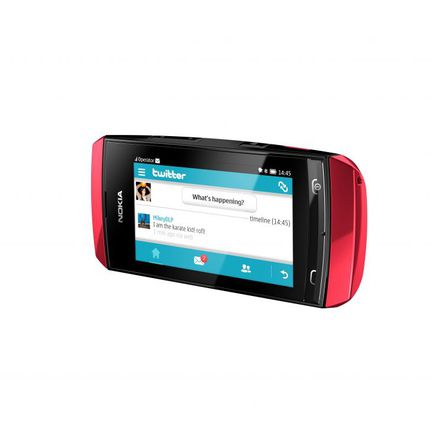
Son cousin proche, le Nokia Asha 306 reprend les caractéristiques du Nokia Asha 305 mais il possède un seul emplacement SIM et dispose d'une connectivité sans fil WiFi, ce qui en fait un mobile WiFi à moins de 100 € puis qu'il est commercialisé au tarif de 95 € TTC nu.
Pour ces deux modèles, une offre de téléchargement valable sur 40 jeux Java de l'éditeur Electronic Arts est offerte aux acheteurs. Ces trois nouveaux modèles de la gamme Asha seront disponibles à partir du troisième trimestre 2012.
Note : contrairement à ce qu'écrivent ou disent 80% de nos confrères, les Nokia Asha ne sont PAS des smartphones. Ils s'en inspirent et en reprennent toujours plus de fonctionnalités ( et l'évolution de l'interface Series 40 a été pensée en ce sens ) mais ils ne sont pas comptabilisés comme tels.

05/07/2012 01:17 par slaytane

Sur le marché du téléphone low cost, Nokia entend bien reprendre sa place de premier constructeur mondial. Le constructeur finlandais lance le Nokia 112 et le Nokia 113, deux téléphones mobiles d'entrée de gamme autour des 50 euros capables d'aller sur Internet.
En pleine conquête du marché des smartphones avec l'OS mobile de Microsoft, Windows Phone, Nokia n'en n'oublie par pour autant le marché des téléphones mobiles où il était, il y a peu, le constructeur numéro un.
Espérant reconquérir son marché de prédilection, le constructeur finlandais a annoncé la sortie prochaine de deux téléphones low cost : les Nokia 112 et Nokia 113. Pas d'écran tactile, ces deux téléphones gardent une forme dite candybar avec un écran de 1,8 pouce de diagonale, un clavier numérique et l'interface Séries 40. A la différence des téléphones d'entrée de gamme, ces deux modèles permettront à leurs utilisateurs d'accéder à Internet sur des sites adaptés, notamment ceux des réseaux sociaux comme Facebook et Twitter.

Côté technique, ces téléphones sont rudimentaires puisque l'appareil photo est doté d'un capteur de 0,3 megapixels et qu'ils ne sont pas compatibles 3G. En revanche, le Nokia 112 sera doté d'un logement pour deux cartes SIM et de la technologie EasySwap qui permet de basculer d'une carte à l'autre sans éteindre le mobile. Quant au 113 bi-bande, il bénéficie d'un batterie de 800 mAh lui procurant une autonomie de 7h50.
Ces deux mobiles visent à l'évidence les jeunes adolescents dont les parents ne veulent pas qu'ils se promènent avec un smartphone à 600 euros. D'ailleurs, Nokia a prévu d'intégrer 40 jeux EA Games d'une valeur de 75 euros. Le Nokia 112 devrait être commercialisé autour de 49 euros et le Nokia 113 autour de 55 euros sans subvention.

05/07/2012 01:14 par slaytane
We have seen quite a bunch of Nokia tablets here in concept phase, but one more couldn’t hurt. Meet the Nokia Tiviti 9210, a Windows 8 slate with some very appealing specifications. Andy Weir of Neowin imagined this device and the result were the pictures below. This slate runs Windows 8 RT on top of a dual core Snapdragon S4 processor at 1.5 GHz.

This is a 10.1 inch tablet with a Super IPS+ LCD ClearBlack display with a 1920 x 1200 pixel resolution and Gorilla Glass 2 protection. It weighs 575 grams and features 1GB of SDRAM, 32/64GB of storage, a 7700 mAh battery with 12 hours of functioning time and an 8 megapixel camera at the back. The camera has a 2.2 aperture, 28mm focal length and supports full HD video capture at 30 fps with stereo audio capture. The Nokia Windows 8 tablet also has a 2MP front camera, accelerometer, Glonass, AGPS, gyroscope and proximity sensor.
On the connectivity side, it offers WiFi, Bluetooth 4.0, 4G LTE, DLNA, microUSB and a 3.5mm audio jack. There’s even pricing envisioned here, so for example you’ll pay $499 for the 32 GB WiFi + 4G version. The 64GB one will cost $629 and these are pretty reasonable price tags. Also know that the product measures 8.8mm in thickness, so only a bit thicker than the Transformer Prime. Would you buy this tablet instead of the iPad 3?

Bob Freking did some research before creating the Nokia Prodigy concept phone and came up with an interesting idea for a Windows Phone 8 device. Nokia Prodigy runs this OS and offers 16 to 64 GB of storage and 1GB of RAM, all of them borrowed from the Nokia N9.

At the back we have a 41 megapixel PureView camera, perhaps even a smaller sensor than on the first PureView phone. Nokia Prodigy does 1080p video capture, a ClearBlack HD display with AMOLED technology and inside there’s a 1.85 GHz Nova A9540 processor, a dual core one actually. The GPU is a PowerVR SGX 544 and other specs include NFC, a front facing camera, a microSD card slot and the latest in Windows Phone apps. Skype is also integrated into the experience and available through the front camera.
I say that this project is doable and that around this fall or winter we’ll see something like this in the stores. I’m really curios what CPU Nokia will choose and how they will be able to evolve their displays to a modern level. Also, the PureView camera would make a fine addition to a Windows Phone 8 model.

20/05/2012 15:08 par slaytane
Brian Bovi, the designer of the Xperia Pop Windows Phone model is now back with a Lumia concept. The designer is from Luxembourg and this time he envisioned the Nokia Lumia 850, based on nothing else than his own imagination. Brian wanted to create a successor the Nokia Lumia 800 and the result can be seen in the pictures below.
We’re dealing here with a 3.8 inch smartphone with a high res display, curved glass, plastic body and an 8 megapixel camera with Carl Zeiss lens. This model also has a stereo speaker system and the shape of the Nokia Lumia 850 is described as “edgeless” by the designer. As you can see, this phone supports LTE connectivity and I’d imagine it in the portofolio of AT&T in the USA. It’s a pretty wide device that tries to keep all the physical buttons on a single side, the right one.
You can find the volume buttons, On/OFF button and camera button on that side. At the top we have what looks like the microSIM card slot, if I’m not mistaking. I like the form factor of this device and this wide approach could be interesting in the future. Do you prefer the longer Lumia 800 or the wider Lumia 850? You can follow Brian Bovi on Twitter (@brianmfb).


07/05/2012 15:56 par slaytane
Samsung a présenté, jeudi 3 mai à Londres, son tout nouveau smartphone haut de gamme, le Galaxy S3. Fonctionnant sous Android Ice Cream Sandwich, il se distingue de la concurrence par son intelligence artificielle puisqu'il réagit à la fois au doigt, à la voix mais aussi au regard que l'utilisateur pose sur lui.
Il sera disponible en Europe à partir du 29 mai.
Il succède au Galaxy S2, un considérable succès de ventes sorti il y a tout juste un an.
Un peu plus grand (écran Super Amoled HD de 4,8 pouces), plus épais (8,6 mm) et plus lourd (133 g) que le Galaxy S2, le S3 est équipé d'un processeur à quatre coeurs cadencé à 1,4GHz qui le rend bien plus rapide à l'exécution.
Le smartphone est capable de prendre simultanément une photo et une vidéo, grâce à ses deux capteurs, placés en façade et au dos.
Ce dernier propose des prises de vues photo/vidéo avec de nouvelles fonctionnalités comme la reconnaissance faciale qui permet de taguer ses amis. Il est également possible de prendre plusieurs photos en rafale avant de n'en conserver que la meilleure.
Il intègre également la technologie NFC qui permet notamment le paiement ou l'échange de données sans contact.
Enfin, plusieurs accessoires ont été présentés parmi lesquels un chargeur sans fil.
Un assistant vocal intelligent
Le Galaxy S3 est aussi équipé d'un assistant vocal intelligent, baptisé S Voice. Celui-ci comprend le langage naturel, aussi bien pour répondre à des questions pratiques que pour lancer des applications puis s'en servir. De même, un simple "bonjour" sort l'appareil de son mode veille. S Voice reconnait d'ores et déjà huit langues, parmi lesquelles le français.
Mais la grande innovation du Galaxy S3, c'est qu'il réagit directement aux yeux et à certains mouvements. Ainsi, ce téléphone ne se mettra jamais en veille tant que son utilisateur le regardera.
Placer le téléphone à côté de son oreille après avoir sélectionné un contact ou pendant que l'on tape un texto suffit à passer un appel directement à la personne concernée!...
This may not be much of a concept, but the idea behind it is great. We’ve already seen Android 4.0 ported to the Nokia N9 and now Deviantart use Slatd created this render that shows us a potential future Nokia model. Meet the Nokia N1, the very first model to run Android 4.0 ICS preinstalled.
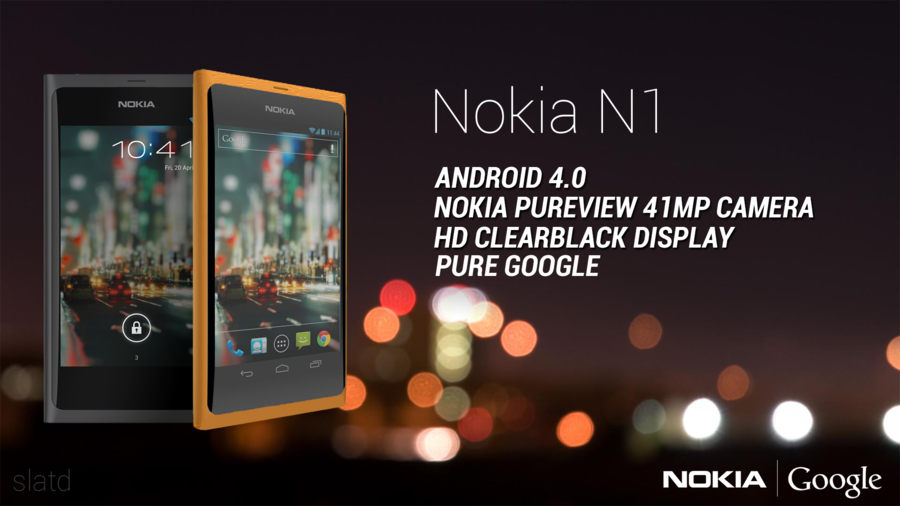
This phone comes with the 41 megapixel Nokia PureView camera sensor, a HD ClearBlack display and the pure Google experience. Since right now Nokia is teamed up with Microsoft there’s no way you’ll see something like this, but give it some time and maybe Nokia will come around and get rid of Windows Phone. It’s interesting to see those capacitive buttons below the display on the device and they actually look pretty nice. The creator of this 41 megapixel Android cameraphone says that he took the Lumia 800 as inspiration.
So, this means we’re dealing with a 3.7 inch smartphone with upgraded resolution, probably the best pixel density out there since it’s 720p on a smaller than usual diagonal. I’ve seen a while ago some Nokia N9 clones made in China and they ran Android, so it’s actually possible to fulfill your fantasy of owning that shell for a device and with a custom OS of your choice.

17/04/2012 16:08 par slaytane
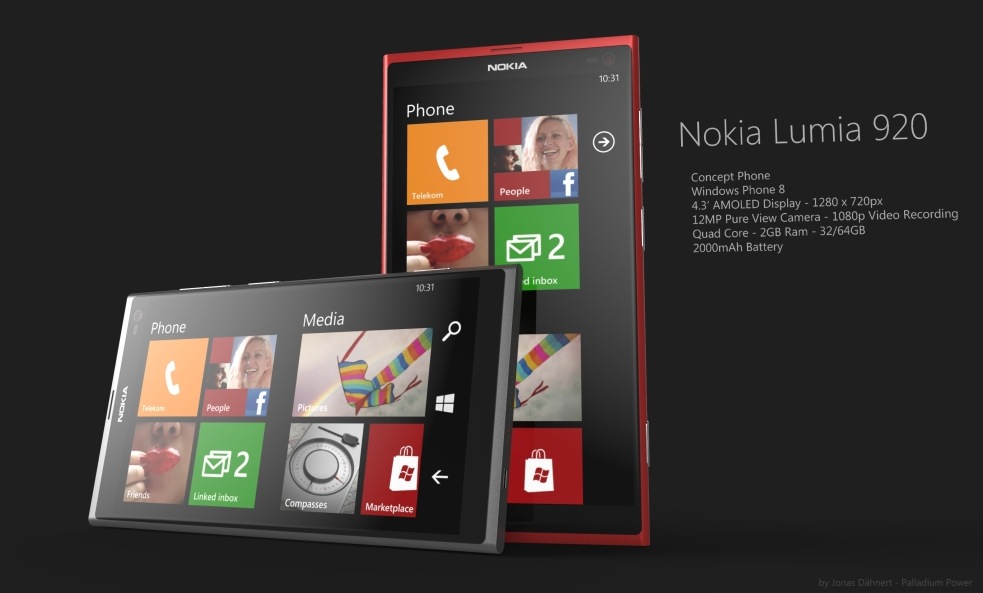
We’ve seen the combination between the Lumia and Pureview series from Nokia a bunch of times so far and here’s yet another Nokia concept phone based on this idea. The creation of Jonas Dahnert, Nokia Lumia PureView 920 is a Windows Phone 8 Apollo device with a 12 megapixel PureView camera and a quad core processor.

The design seems the standard one of the Lumia 800/900 models, so it’s all polycarbonate and straight edges. The Lumia 920 comes with a 4.3 inch screen with 720p resolution, a 2000 mAh battery, support for 1080p video capture and the screen is curved. There’s also a front facing camera on board and a Xenon flash. This Lumia newcomer also features a camera button and strangely enough it lacks the classical Windows Phone capacitive keys. They could make an appearance when you swipe or contextually…
Landscape view is also supported and there’s the concept of tile grouping via an app called New Groups. Nokia Lumia PureView 920 has a metallic back and another good thing is that Xenon flash with LED assist, so I expect clear shots, even in poor lighting conditions. One single problem here: Nokia already made 3 phones with the same design (N9, Lumia 800 and 900). Is there room for a fourth one?



17/04/2012 16:04 par slaytane
Bob Freking is back and he has around 4 new concepts for some very interesting devices. The first I’m going to show you is the Nokia Lumia S, a Windows Phone 8 Apollo smartphone with a 1.5 GHz dual core Snapdragon S4 processor and a 4.5 inch 1280 x 720 pixel display (ClearBlack HD). There’s also that nifty PureView camera in the mix…
Nokia Lumia S features a 41 megapixel camera sensor with 2160p HD video recording. Other specs of this WP8 phone include 2 GB of RAM, a case that’s 9mm thick and a stainless steel scratchproof coating. 32GB of internal memory, SD card support and Bluetooth 4.0 are also on board. The design reminds me a bit of the Lumia 800/900 and that rectangular area at the bottom with the Windows Phone keys is an interesting aspect, although white may not be the right choice for it.
I wonder if this is a LTE phone with a front camera…. since modern WP8 device will most likely come with these functions. Also, in case you’re wondering, the real Windows Phone Apollo units will support dual core processors, so this device is pretty realistic. Get ready for some new Bob Freking concept phones in the following days!