Blod 9790 & Curve 9380

17/04/2012 15:50 par slaytane


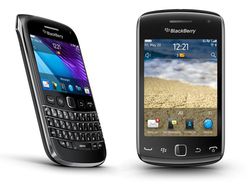
Research in Motion étoffe ses gammes sous BlackBerry OS 7 en ajoutant les modèles BlackBerry Bold 9790 et Curve 9380.

BlackBerry Bold 9790 Curve 9380En attendant les premiers smartphones sous BBX, Research in Motion poursuit l'élargissement de ses gammes de smartphones sous BlackBerry OS 7 en annonçant deux nouveaux modèles qui seront commercialisés dans les prochaines semaines.

Le BlackBerry Bold 9790 embarque un affichage 2,44" tactile en mode paysage et en résolution 480 x 360 pixels et est doté d'un processeur 1 GHz. On retrouve en façade un clavier complet de messagerie et 8 Go d'espace de stockage interne, extensible par port microSDHC.

Le BlackBerry Curve 9380 est une révision tout tactile de la famille Curve ( les modèles 93x0 précédents possédant un clavier ). On trouvera donc un grand écran tactile 3,2" et, du fait de son positionnement en entrée / milieu de gamme, des applications pré-installées, notamment pour les réseaux sociaux, comme BlackBerry Messenger, Facebook ou Twitter.

Le smartphone embarque également au dos un APN 5 megapixels. Les deux smartphones étant sous BlackBerry OS 7, ils peuvent accueillir des fonctions NFC et de réalité augmentée, ces fonctionnalités étant prises en charge par la plate-forme mobile.

Les BlackBerry Bold 9790 et BlackBerry Curve 9380 sont d'abord lancés en Indonésie avant d'être plus largement disponibles d'ici la fin de l'année.


Evo 4g LTE

17/04/2012 15:45 par slaytane

  • Evo 4g LTE

    Evo 4g LTE

    17/04/2012 15:45 par slaytane


Comme prévu, hier soir notre constructeur favori et l’opérateur américain Sprint ont levé le voile sur leur nouveau smartphone : le HTC EVO 4G LTE.

Directement dérivé du HTC One XL, celui qui fut pressenti un premier temps comme étant le HTC EVO One sera le fer de lance de l’ouverture à la technologie 4G LTE de Sprint. Jusqu’à présent, c’est la technologie WiMax qui était utilisée par l’opérateur.

Voici sans plus attendre les caractéristiques de ce nouveau produit sous Sense 4 :

  • Dimensions : 134.8 x 68.99 x 8.98mm
  • Poids : 134 grammes
  • Ecran : 4,7 pouces Super LCD 2 HD 720p
  • Processeur : 1,5 GHz dualcore Qualcomm Snapdragon S4
  • OS : Android 4.0 + Sense 4.0
  • RAM : 1 GB
  • Stockage : 16 GB internes + slot microSD
  • Stockage en ligne : 25 GB offerts pendant 2 ans par Dropbox
  • Batterie : 2150 mAH
  • Connectique dédiée pour station d’accueil
  • Appareil photo : 8 Megapixels capteur BSIf2.0 avec Flash LED « Smart Flash » doté de 5 niveaux de puissance réglables
  • Caméra frontale : 1,3 Megapixels
  • Possibilité de prendre des photos pendant l’enregistrement vidéo HD
  • Béquille


Ce smartphone est donc une exclusivité américaine et ne verra pas le jour sur le territoire français.
La présence d’une béquille est très intéressante pour un smartphone si puissant et doté d’un écran de cette taille, la batterie gagne également en capacité pour atteindre les 2150 mAH.
Pensez-vous que la marque devrait démocratiser la béquille sur ses smartphones ?


One XL

17/04/2012 15:39 par slaytane

  • One XL

    One XL

    17/04/2012 15:39 par slaytane


Le fabricant taiwanais avait promis des mises à jour vers Android Ice Cream Sandwich pour certains de ses terminaux mobiles au mois de mars 2012. Leur disponibilité est imminente.

Le fabricant HTC fait un nouveau point sur la mise à jour vers Android 4.0 Ice Cream Sandwich de ses smartphones lancés en 2011, alors que la première fournée 2012, constituée de la gammeHTC One, directement sous Android 4.0, s'apprête à être commercialisée.

La liste des smartphones éligibles avait déjà été publiée il y a quelques semaines  mais le fabricant la rappelle et annonce que les premières mises à jour, qui concerneront d'abord comme prévu les HTC Sensation et HTC Sensation XE sont quasiment prêtes à être diffusées et seront rapidement suivies de celles pour les HTC Sensation 4G et HTC Sensation XL.


HTC logo newHTC devrait donc se tenir à sa prévision d'un premier déploiement fin mars 2012mais il avertit que la disponibilité effective dépend fortement des pays et des opérateurs concernés. Il faudra donc peut-être faire preuve d'un peu de patience après l'annonce de la disponibilité des mises à jour par HTC.

L'opérateur indique travailler avec ses partenaires pour fixer un calendrier concernant les autres smartphones concernés par la mise à jour vers Android Ice Cream Sandwich. Pour rappel, la liste des smartphones HTC ayant droit à Android 4.0, est la suivante ( certains étant réservés au marché US ) :

  • Droid Incredible 2 by HTC
  • HTC Amaze 4G
  • HTC Desire S
  • HTC Desire HD
  • HTC Evo 3D
  • HTC Evo Design 4G
  • HTC Incredible S
  • HTC Sensation
  • HTC Sensation XL
  • HTC Sensation 4G
  • HTC Sensation XE
  • HTC Raider
  • HTC Rezound
  • HTC Rhyme
  • HTC Thunderbolt
  • HTC Vivid


Velocity 4G

17/04/2012 15:36 par slaytane

  •  Velocity 4G

    Velocity 4G

    17/04/2012 15:36 par slaytane


HTC Velocity 4G Review: Fast, But Not The Best

GIZMODO AU


Thumbnail

Australia has waited patiently for its first LTE smartphone, and it has finally arrived in the form of the HTC Velocity 4G. It is by all accounts an excellent high-end smartphone, but there are some limitations around Telstra’s 4G service that take some of the sparkle away and restricts our buy recommendation to the few, not the many.

Also: What Will Be Your Next Australian Super Phone? 22 Hot Phone Specs Compared (including the HTC Velocity 4G)

Why It Matters

The HTC Velocity 4G is Australia’s first LTE smartphone. Theoretically this means data speeds of 100Mbps peak downloads and up to 50Mbps uploads on Telstra’s 1800MHz LTE spectrum. Typical speeds, however, are obviously much less and depend on a number of things, including the speed of the website you’re trying to visit and how close you are to a base station. You can expect real-world download speeds of between 2Mbps and 40Mbps, which is about five times faster than what you’d normally get on 3G, and typical upload speeds of between 1Mbps and 10Mbps, which is three times faster than upload speeds on 3G.

What this means is that web pages load faster, streaming videos take less time to buffer, photos take much less time to upload and large files can be emailed more quickly. You get the idea. It certainly sounds great on paper, but it’s definitely not as “instantaneous” as Telstra says, and I actually laughed out loud when I saw the words “mach speeds” on HTC’s website. They might have gotten away with passing off LTE as 4G, but let’s not get carried away here.

Optus and Vodafone have both announced plans to roll out a LTE service, but Telstra was first to launch and says that its 4G footprint is currently available in all Australian capital city CBDs (within 5km from the GPO), associated airports and some regional areas (within 3km from the GPO). Outside of these areas, the HTC Velocity 4G will default to dual-channel HSPA+ connectivity, which is a faster 3G service that provides theoretical speeds of between 1.1Mbps and 20Mbps.

What We Like

There’s a bit more plastic on the Velocity 4G than we’ve seen before on HTC phones, but its build quality is superb and it feels every bit like the high-end smartphone that it is. The battery cover is made of a slick charcoal aluminium while the rest of the phone is encased in a glossy black plastic. It has a distinctly geometric feel, with its straight lines and angular form factor. At 4.5 inches the qHD 960×540 screen on the Velocity 4G is a bit smaller than the one on the Samsung Galaxy Nexus, but it feels quite a bit larger and heavier thanks to a raised back. We love that it feels solid and heavy in the hand.


Thumbnail


Photo taken with HTC Velocity 4G, default settings.

The rear camera on the Velocity 4G is not to be underestimated. It packs a 28mm wide-angle F2.2 lens and back-illuminated sensor for superb daytime shots with a shallow depth of field, as well as surprisingly good shots in low light. HTC Sense 3.5 brings an “instant capture” camera to the Velocity 4G, but it’s not quite as instant as the zero shutter lag feature that you’ll find on the Samsung Galaxy Nexus.

The 1.5GHz dual-core processor inside the Velocity 4G is impressively efficient, providing a clean and snappy user experience and a seamless integration of HTC’s Sense 3.5 user interface. Battery life is better than expected, although it does deplete much faster on 4G. Getting a full day out of the phone will require a top up, but as with all high-end smartphones these days, we just put up with it and think it’s normal. I personally found that the HTC Velocity 4G outlasted the Samsung Galaxy Nexus by a few hours, although the former would start bugging you about low battery at 25 per cent, while the latter leaves you alone until the battery is on its very last legs.

The Velocity 4G comes with Android 2.3.7, which is the latest iteration of Gingerbread. Android 4.0 will be available within a few months, according to Telstra, but if Ice Cream Sandwich is what you’re really after, you’re probably better off waiting for one of the handful of 4G smartphones that Telstra will be letting looseby winter.

Speedtest.net gave us some very impressive stats that put our ADSL2+ fixed line connections to shame. There’s a noticeable speed bump when loading Facebook photos, streaming YouTube videos and emailing large files, but your mileage will vary depending on what you’re doing. If that website you’re trying to access is running off a shitty server, not even 4G speeds are going to help you much.

While Telstra doesn’t give you any extra data allowances for being on 4G, it’s worth noting that Telstra isn’t charging a premium for its 4G service — they could have legitimately charged extra but chose not to. And be prepared to see your data usage jump — I’ve switched from a $40 plan with 800MB of data to a $50 plan with 2GB.


Thumbnail


Click image to enlarge. I’ve included speed test results for my home ADSL2+ connection speed test result (Wi-Fi symbol) and Edge (the line with the worst results).

What We Don’t Like

Although the phone comes with a fairly standard 16GB of internal storage, the phone’s bundled software and operating system takes up 3GB, leaving you with 13GB for widgets and apps. We’re happy to see that HTC has bumped up the internal storage capacity in its most recent phones and stopped crippling them, but you’ll have to bring your own microSD card for the Velocity 4G. I’m not going to grumble too much — more internal storage for no microSD card is an excellent trade.

Our main complaint is not with the phone but with Telstra’s 4G service. It’s inconsistent and unpredictable to the point where you stop seeing the 4G as a feature of the phone and more as a bonus when it does appear. For instance, as soon as you walk into Wynyard station or the QVB, the phone switches over to the 3G network despite being well within the 5km 4G inclusion zone. The first day I took the phone home (I live 4km from the Sydney CBD), I was appalled to find that I was on Edge — not 4G, not even 3G. Fortunately, it switched to 4G the next day and has been like that at home ever since. In our offices at Circular Quay, my review unit picked up a 4G signal from day one, while the phone that Angus tested never got a 4G signal and turned out to be faulty. On my way home from dinner the other day, the phone randomly picked up a 4G signal in Stanmore (6km from the CBD), and it looks like there are pockets of 4G coverage all over the place. My advice would be to check Telstra’s coverage map — you may live or work in one of those random pockets of 4G service.

We also think it’s a bit lame that Telstra is marketing its LTE service as 4G when in fact it does not satisfy the 4G standard requirements. LTE is considered to be part of the 3G standard, but for all intents and purposes it is being sold by carriers as 4G technology. US carriers are doing the same thing to mislead consumers, and nobody really seems to care. It’s dodgy behaviour and sets a dangerous precedent for an industry that is known for its bullshit.


Thumbnail


Should You Buy It?

The phone itself is great and only let down by a 4G service that is vague in definition and coverage. If you don’t live within or frequent the 4G inclusion zone, the HTC Velocity 4G falls back to HSPA+ dual-channel 3G speeds (1.1Mpbs-20Mbps). So while the speed difference between your regular 3G and DC-HSPA+ connectivity is small, that bump makes the Velocity 4G faster than anyone else’s phone. If you want the fastest phone you can get right now, the HTC Velocity 4G is the phone for you. For someone like me who works and lives within the 4G coverage areas — and totally addicted to being online all the time — the Velocity 4G is the ideal solution.

Also, if you want the Velocity 4G, you are forced into a relationship with Telstra (which isn’t necessarily a bad thing) since it has the exclusive. By the time the other carriers launch their own LTE networks, there will be better and newer phones in the market and this one will be long forgotten. Telstra alone is getting ready to launch a portfolio of 4G phones within the first six months of 2012.

Specifications

OS: Android 2.3.7 (upgradable to Android 4.0)
Screen: 4.5-inch qHD S-LCD touchscreen (960×540)
Processor / RAM: 1.5GHz dual-core / 1GB
Storage: 16GB internal (up to 32GB microSD)
Camera: 8MP rear (1080p HD video), 1.3MP front
Weight: 163.8g
Battery: 1620mAh
Price: $0 on $79 Telstra Freedom Connect Plan or $864 outright


Thumbnail


Thumbnail


Thumbnail


Thumbnail


Titan II

17/04/2012 15:16 par slaytane


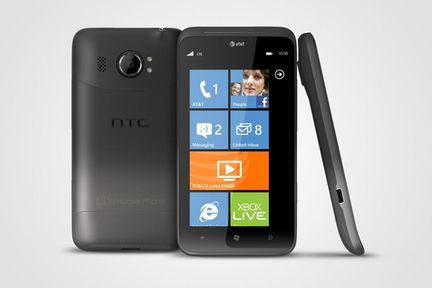
Au salon CES 2012, HTC dévoile le Titan II, un smartphone Windows Phone Mango compatible LTE et embarquant un APN...16 megapixels.

HTC logo newLe fabricant taiwanais HTC, malmené par une fin d'année difficile, fait dans la démesure au salon CES 2012 de Las Vegas en annonçant son smartphone Titan II. On connaissait le HTC Titan, smartphone Windows Phone lancé en octobre et doté d'un grand affichage 4,7" et le Titan II hérite d'une partie de ses caractéristiques.

Lui aussi bénéficie d'un affichage 4,7" SLCD et embarque un processeur SnapDragon S2 1,5 GHz en provenance de Qualcomm mais il dispose également d'un APN 16 megapixels au dos ainsi que d'un APN 1,3 megapixel en façade pour la visioconférence.

Si la taille du capteur ne fait pas tout, c'est une première pour cette catégorie de produit. L'appareil photo dispose d'une touche dédiée et peut enregistrer de la vidéo en qualité HD 720p. Il est grand angle, dispose d'un double flash LED et comporte un système de stabilisation d'image.

HTC Titan II

L'autre point fort du terminal, c'est sa compatibilité 4G LTE qui va permettre un accès Internet à très haut débit...en exclusivité sur le nouveau réseau de l'opérateur US AT&T qui se dépêche de rattraper son retard en matière de couverture sur son concurrent Verizon.

On trouve bien sûr à bord du HTC Titan II la plate-forme Windows Phone Mango, avec son système de hubs, ses tuiles dynamiques et son portail d'applications Windows Phone Marketplace, qui a passé récemment le cap des 50 000 applications ( toujours très loin des 400 000 applications de l'Android Market et des plus de 500 000 applications de l' App Store ).

Le prix du HTC Titan II n'est pas connu. Il sera lancé par AT&T dans les prochains mois.


DROID 4

17/04/2012 15:10 par slaytane


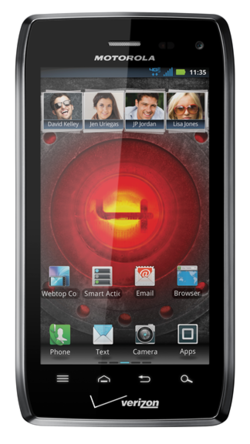
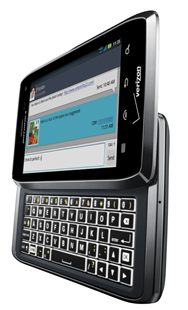
On ne change pas une équipe qui gagne : Motorola et Verizon ont dévoilé au salon CES 2012 le smartphone Motorola Droid 4, doté d'un clavier coulissant et compatible LTE.

Motorola Droid 4 01Au salon CES 2012 pleuvent les annonces de produits compatibles LTE et se confirment les partenariats historiques. Motorola Mobility reste ainsi fidèle à l'opérateur Verizon Wireless pour dévoiler le smartphoneMotorola Droid 4, dernier-né d'une lignée qui a permis au fabricant de redresser depuis 2009 une activité qui était en chute libre et de se spécialiser dans les terminaux Android.

Le Motorola Droid 4 est un smartphone doté d'un affichage tactile 4" qHD ( 960 x 540 pixels ), avec 16 Go de mémoire interne extensible par port microSD et un APN 8 megapixles au dos, capable d'enregistrement vidéo 1080p, sans oublier un APN 1,3 megapixel en façade.

Il embarque un processeur dual core 1,2 GHz avec 1 Go de RAM et peut exploiter les accessoires Lapdock 100 et Lapdock 500 Pro, le transformant en client léger.


Caractéristiques
Motorola Droid 4 02Le Motorola Droid 4 se distingue par son clavier complet coulissantrétroéclairé qui en fera un parfait terminal de messagerie pour des besoins autant personnels que professionnels, d'autant que l'appareil propose des facilités dans ce dernier domaine ( chiffrement des données, virtualisation... ).

On y trouve également les connectivités sans fil WiFi et Bluetooth 2.1, un module A-GPS avec boussole électronique et la Radio FM. Le Droid 4 embarque Android 2.3 Gingerbread et pourra être mis à jour vers Android 4.0 Ice Cream Sandwich à partir du deuxième trimestre 2012. 

Il promet jusqu'à 12h30 d'autonomie en conversation et plus de 8 jours en veille. Destiné aux réseaux mobiles de Verizon, c'est un smartphone CDMA2000 mais aussi compatible 4G LTE ( Long Term Evolution ), assurant des débits descendants de 5 à 12 Mbps et montants de 2 à 5 Mbps.

Verizon ne donne pas son prix mais indique qu'il sera proposé d'ici quelques semaines.

Annonces Google
Complément d'information


Galaxy Player 70 plus

17/04/2012 15:06 par slaytane

  • Galaxy Player 70 plus

    Galaxy Player 70 plus

    17/04/2012 15:06 par slaytane

Après avoir officialisé pléthore de smartphones à l'occasion du Mobile World Congress la semaine dernière, Samsung continue sur sa lancée en dévoilant le Galaxy Player 70 Plus, un lecture multimédia tactile qui n'est pas sans rappeler les smartphones de la marque.

L'appellation Galaxy ne trompe pas et si le Player 70 Plus ne permet pas de téléphoner, il a néanmoins l'allure d'un smartphone. Côté design, d'une part, car la patte de Samsung est palpable. Côté interface ensuite, puisque ce lecteur fonctionne à l'aide d'Android 2.3 Gingerbread.

Pour le reste, on trouve un écran tactile de 5 pouces – pas très éloigné des 5,3 pouces du Galaxy Note – un processeur à double cœur cadencé à 1 Ghz, un capteur photo de 5 mégapixels, du WiFi, du Bluetooth, un tuner FM, un lecteur de carte microSD et une batterie de 2 500 mAh.

Outre le fait que le Galaxy Player 70 Plus soit l'un des premiers lecteurs de ce type à disposer d'un processeur dual core – avec le Z1000 de Sony – il s'agit là d'une tentative assez évidente de la part de Samsung de disposer de son « iPod touch ». Ce lecteur sera commercialisé prochainement en Corée à des prix équivalents à 270 euros pour le modèle 16 Go, et 320 euros pour le modèle 32 Go.

La suite sur Clubic.com

Galaxy Note N8010

17/04/2012 14:57 par slaytane

  • Galaxy Note N8010

    Galaxy Note N8010

    17/04/2012 14:57 par slaytane


Surclassé par l'iPad 3 au niveau des caractéristiques techniques, Samsung met en avant les usages que permet sa tablette Galaxy Note 10.1 et que n'offre pas le nouvel iPad d'Apple.

Alors qu'Apple semble prêt à exploser son propre record du nombre de tablettes vendues en une journéeavec l'iPad 3, Samsung n'entend pas laisser son concurrent s'imposer comme le seul constructeur de référence sur le marché. Le fabricant coréen s'est fendu d'un comparatif assez surprenant entre le NouveliPad et sa propre tablette Galaxy Note 10.1.

Alors que la tablette d'Apple surpasse celle de Samsung sur le plan des performances brutes et de la résolution d'écran, la firme met en avant les usages du Galaxy Note 10.1 offerts notamment par son stylet, inexistant sur l'iPad (sauf à acheter un accessoire). Il note en particulier que sa tablette reconnaît avec son S-Pen pas moins de 255 niveaux de pression, qui permettent d'écrire et de dessiner en toute précision, alors que l'iPad 3 n'offre qu'une reconnaissance basique du toucher. Par ailleurs, Samsung note que son système permet d'utiliser deux applications côte à côte et d'interagir entre les deux, si elles sont compatibles, alors que le multi-tâches de l'iPad reste encore sommaire.

Pas sûr néanmoins que ces usages relativement spécifiques du Galaxy Note 10.1 permettent de convaincre le grand public visé par Apple, qui recherche avant tout la simplicité et l'efficacité.


[MWG] Samsung Galaxy Note 10.1 par Numerama


Galaxy Beam

17/04/2012 14:51 par slaytane

  • Galaxy Beam

    Galaxy Beam

    17/04/2012 14:51 par slaytane


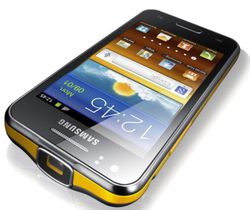
Parmi les produits que Samsung dévoilera au salon MWC 2012, on trouvera le Samsung Galaxy Beam, un smartphone Android embarquant un picoprojecteur.


Les picoprojecteurs ne sont pas encore vraiment répandus dans les appareils mobiles mais l'amélioration des technologies devrait les rendre plus présents ces prochaines années. Samsungavait déjà fait dans la démonstration technologique en dévoilant dès 2009 un modèle i7410 doté d'un module de projection, sans pourtant que la tendance se généralise.

Les fabricants de semiconducteurs travaillent cependant à améliorer les principales caractéristiques des picoprojecteurs (encombrement, consommation d'énergie, restitution de l'image) afin d'en faciliter l'intégration.

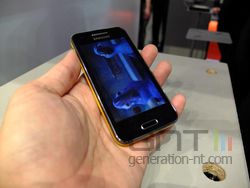
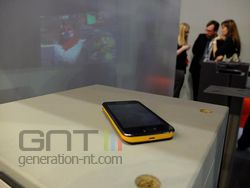
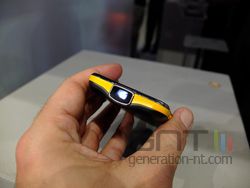
Pour le salon MWC 2012, le fabricant coréen annonce le Samsung Galaxy Beam, un smartphone Android 2.3 Gingerbread avec affichage 4" 800 x 480 pixels et processeur 1 GHz dual core embarquant un picoprojecteur de puissance 15 lumens et qui doit servir à partager des contenus en toutes circonstances, en affichant photos et vidéos sur toute surface, "même en extérieur", promet la société.

Samsung Galaxy BeamElle y voit aussi des possibilités ludiques comme de productivité, en permettant d'afficher des présentations sans avoir  besoin d'équipements ou de salles dédiées. Le smartphone possède des dimensions de 124 x 64 x 12,5 mm (plutôt fin par rapport aux modèles antérieurs) pour 143 g et dispose des connectivités sans fil WiFi et Bluetooth 3.0, avec un espace de stockage interne de 8 Go extensible par port microSD.

Le Samsung Galaxy Beam est aussi un smartphone quadribande GSM / GPRS / EDGE et quadribande HSPA 14,4 Mbps, le tout étant alimenté par une batterie 2000 mAh. Pas de date de disponibilité proposée ni de prix mais le terminal sera en démonstration au salon MWC 2012 de Barcelone.

MàJ 16h00 : Engadget précise que le processeur est un ST Ericsson U8500 dual core ( ARM Cortex-A9 ) avec 768 Mo de RAM. Des accessoires seront disponibles pour en faire un véritable système de projection d'appoint.

Samsung Galxy Beam 02 Samsung Galaxy Beam 01

Samsung Galaxy Beam

Samsung Galaxy Beam sur le stand Texas Instruments


Galaxy Tab 2 P5110

17/04/2012 14:47 par slaytane

  • Galaxy Tab 2 P5110

    Galaxy Tab 2 P5110

    17/04/2012 14:47 par slaytane

Samsung keeping its rituals alive and up to date has announced a new Samsung Galaxy Tab 2 with 10.1 inches screen. It’s a twin introduction with Samsung Galaxy Tab 2. Both the Tabs have almost same features regardless of the fact that both are different in sizes. You can compare Samsung Galaxy Tab 2 10.1 price in Pakistan with its twin model for buying your own choice. Come and read what Samsung has given in 10.1 inches Galaxy tab 2. This device too doesn’t support GSM network and therefore, can’t work anywhere in the world for SMS and MMS purposes. With PLS TFT capacitive touch screen, 16M colors and Corning Gorilla Glass protection, this 10.1 inches screens adds an extra feature in it. Its primary camera is similar like other models but the secondary camera is somewhat less than the twin model having VGA result. The entire Tab2 LCD is supported with Android OS, v4.0.3 (Ice Cream Sandwich) that works on Dual-core 1 GHz Cortex-A9 and PowerVR SGX540 graphic processing unit. Moreover, it supports SNS integration, TV-out, image/video editor, Document editor/viewer, Google Search, Maps, Gmail. The verdict, you can share and transfer all your files and documents through USB and Bluetooth. Entirely new and stylish one, the Samsung Galaxy Tab 2 10.1 P5110 is perfect for your office work.