
I5800 galaxy 3
25/06/2010 03:23 par slaytane


25/06/2010 03:23 par slaytane
< scrolling="no" height="60" frameborder="0" width="234" vspace="0" style="left: 0pt; position: absolute; top: 0pt;" src="http://googleads.g.doubleclick.net/pagead/ads?client=ca-pub-7335032025195922&format=234x60_as&output=html&h=60&w=234&lmt=1277430938&channel=8844758926&ad_type=text&color_bg=FFFFFF&color_border=FFFFFF&color_link=6BBD46&color_text=000033&color_url=6BBD46&flash=10.0.45&url=http%3A%2F%2Fwww.ubergizmo.com%2Ffr%2Farchives%2F2010%2F06%2Fle_samsung_i5800_galaxy_3_serait_plus_cher_que_prevu.php&dt=1277430940957&shv=r20100616&correlator=1277430940962&frm=0&adk=885743494&ga_vid=1579786012.1277430939&ga_sid=1277430939&ga_hid=1282134780&ga_fc=1&ga_wpids=UA-130705-3&u_tz=60&u_his=12&u_java=0&u_h=600&u_w=1024&u_ah=570&u_aw=1024&u_cd=24&u_nplug=9&u_nmime=11&biw=1024&bih=417&ref=http%3A%2F%2Fwww.google.co.ma%2Fsearch%3Fq%3DI5800%2BGalaxy%2B3%26ie%3Dutf-8%26oe%3Dutf-8%26aq%3Dt%26rls%3Dorg.mozilla%3Afr%3Aofficial%26client%3Dfirefox-a&fu=0&ifi=1&dtd=128&xpc=fUYqFGsfxr&p=http%3A//www.ubergizmo.com" name="google_ads_frame" marginwidth="0" marginheight="0" id="google_ads_frame1" hspace="0" allowtransparency="true">
Le Samsung i5800 Galaxy 3 qui devrait sortir sur le marché ce Juillet serait aux alentours de 540$ en Russie après conversion. Pour cette somme, vous aurez un écran tactile 3.2" WQVGA, Wi-Fi 802.11 b/g/n et HSDPA, A-GPS, une prise casque 3.5mm, un APN autofocus 3.2 mégapixels et 170Mo de mémoire interne. En contraste, le Nokia N8 coûte 80$ de moins que le Galaxy 3 dans cette partie du monde, et à moins que vous ayez une affection particulière pour Android, le Nokia serait une meilleure affaire

25/06/2010 03:19 par slaytane
 Le téléphone mobile Samsung B7722, que nous découvrions il y a peu, est un modèle monobloc aux dimensions 11,4 x 5,6 x 1,4 centimètre pour un poids de 112 grammes.
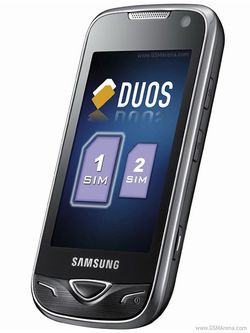 Il propose un fonctionnement sur les réseaux mobiles 2G / 3G / Wi-Fi, un double logement pour carte SIM ( seulement pour la 2G, la 3G n'étant disponible que sur un slot ) et une grande interface LCD tactile 3,2 pouces en 262 144 couleurs et dans une résolution 240 x 400 pixels.
Il offre aussi un appareil photo numérique 5 Mégapixels avec flash LED, un second capteur en façade pour la visioconférence, un lecteur multimédia, un tuner radio avec fonctionnalité RDS et possibilité d'enregistrement, une mémoire extensible de 8 Go au moyen d'une carte microSD / microSDHC, une liaison filaire USB 2.0 et une connectivité sans-fil Bluetooth 2.1. Il embarque enfin une batterie Lithium-Ion 1 200 lui autorisant jusqu'à 12 heures et 50 minutes en appels 2G et jusqu'à 420 heures en veille, ce qui est plus que confortable.
Devant être disponible d'ici la fin du mois, le téléphone mobile Samsung B7722 sera vendu un peu plus de 400 euros nu, hors subvention opérateur.

25/06/2010 03:11 par slaytane
While presenting the X5-01 slider in Singapore, Nokia has also announced a new version of the X6, namely the Nokia X6 8GB (this is the third version of the handset, after the X6 32GB and X6 16GB).
The new Symbian smartphone has a blue back case and, of course, it comes with only 8GB of internal memory.
Other than that, the X6 8GB is not at all different from the old X6, featuring a 3.2 inch touchscreen display with 360 x 640 pixels, HSDPA, Wi-Fi, GPS, Ovi Maps with free navigation, Bluetooth, stereo FM radio, 3.5mm headset jack, and 5MP Carl Zeiss camera with autofocus and flash.


Nokia X6 8GB will be available starting the third quarter of the year for only €225 (about $275). At this price, I can really see Nokia selling lots of X6 8GBs around the world.

25/06/2010 02:49 par slaytane
Le modèle C1-02 en est très proche physiquement et techniquement. Les seules différences se situent au niveau de l'appareil photo numérique qui est absent et des finitions proposées avec un choix entre des tons bleu, gris, noir et prune.
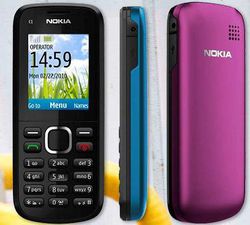
Les téléphones mobiles Nokia C1-01 et C1-02 seront commercialisés à partir du quatrième trimestre à respectivement 59 et 55 euros, hors subvention opérateur.

25/06/2010 02:46 par slaytane
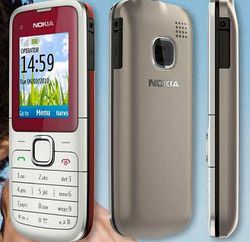
 Le modèle C1-01 est un terminal monobloc compact et léger avec un poids inférieur à 80 grammes. Fonctionnant sous environnement Symbian S40, il propose une compatibilité GSM / GPRS / EDGE, un écran LCD 1,8 pouce affichant 65 536 couleurs dans une résolution 128 x 160 pixels, un appareil photo numérique VGA ( 640 x 480 pixels ), un lecteur audio-vidéo, une radio FM avec fonction RDS et fonction d'enregistrement, une sortie audio 3,5 millimètres, une mémoire extensible de 32 Go au moyen d'un slot microSD / microSDHC, un port microUSB 2.0 et une connectivité Bluetooth 2.1. Disponible en ton bleu minuit, gris, gris foncé et rouge, il est enfin alimenté par une batterie Lithium-Ion à la capacité 1 020 mAh pour une autonomie de 10 heures et 30 minutes en appels et de 21 jours en veille.

15/06/2010 14:06 par slaytane
BlackBerry concepts are very rare in these parts, but we’re pleased to announce that we’ve finally found a pretty good looking design, that would suit RIM. Created by Abhay Vir, the BlackBerry 9999 Curve concept is shown below and it comes with a sexy form factor, based on the idea of “curve”, plus an interesting keypad.
The device also features a 5 megapixel camera at the back and the designer claims that the “soft shape” of the device is aesthetically pleasing. Right now, we’re wondering if the display on the handset is a touchscreen and if it is, we’re curious if it’s capacitive or resistive. Would you buy this product, if the BlackBerry design were real?

04/06/2010 16:26 par slaytane
This time, we have a look at the media playback menu, complete with browsing, artwork and options.

04/06/2010 16:24 par slaytane
Well, what do you know? Microsoft’s done it again! While everyone’s fretting for Apple’s upcoming tablet, Microsoft seemingly readying its own bundle of joy and this time it’s not even an iPhone rival we’re talking about. Microsoft Courier is a mystery tablet that gets pictured below and detailed after the break.
Turns out that Courier is real, although I wouldn’t bet my house on the fact that this isn’t a mere concept, soon to be denied by Microsoft. It’s a tad wrong to call this device a tablet, since it’s more of a booklet, packing dual 7 inch screens, with multitouch support and allowing the user to write, flick and draw with a stylus and his fingers.

The touchscreens are connected via a hinge that incorporates an iPhone-like Home button. At the back you can spot a 3 megapixel camera, with 4x zoom and flash, plus the device is able to charge thanks to an inductive pad, like the Palm Touchstone. Keep in mind that the hinge of the booklet can be used as a “pocket” to hold items that need to be moved from one page to another.
So, what do you say? Real or a concept?


04/06/2010 16:21 par slaytane
Full touch, speakers, huge memory… you know the drill. It this mockup realistic or more close to a concept?

04/06/2010 16:20 par slaytane
We’re speechless and stunned! Barely one year after being astonished by the Nokia Morph concept phone, Microsoft decided to give us a taste of its 2019 technologies. Microsoft Office Labs allowed the general public to check out their “2019″ montage and video, featuring people using next-gen means of communication, sharing content and interaction.
Here’s the futuristic bag of goodies:
The video got introduced on February 28, at the Wharton Business Technology Conference, revealing the future of personal health technologies, high tech education, animations, real time translations, Surface-like displays, transparent walls and screens, projecting devices and whatnot.
There’s even an electronic newspaper in the mix and, of course a flexible handset.


