
iPhone Glows in a Trendy Way
14/03/2010 02:51 par slaytane


14/03/2010 02:51 par slaytane
Before starting the hunt for a new iPhone concept, we stop and check out a neat customization of the famous device. This modding allows the Apple symbol to glow and it was done in Russia, but hopefully it will hit the rest of the world soon.
Now we can only wait for a director’s cut of Lord of the Rings, where Frodo uses this light to find his way to Mordor (video of the mod in action below):

14/03/2010 02:49 par slaytane
There’s no point in checking out iPhone 3G concepts any more, so we’d go out and assume that all the futuristic designs we see from now will be iPhone 3.0 wannabes. The device below might as well be the iPhone 3.0, that comes with a neat transparent body, 3G support, fully functional Mac OS X 10.5 Leopard and 64GB internal memory.

14/03/2010 02:47 par slaytane
Seems that there’s been an iPhone 3G design contest going on and we weren’t aware of that. We’ve got 3 great pics showing you what the iPhone 2.0 should look like. They were posted on Flickr by the user youngSPACE:
There’s also a specs list mentioned, that includes a sturdy titanium and glass design, an OLED screen, True GPS, iChat camera, 3G data speed and a removable battery (yay!). Add a standard headphone jack to that and a 3.2 megapixel camera that’s also video capable and a 32GB internal memory and we’ve got a hit.
The iPhone 2.0 also includes a Sleep Wake button, 2 neat speakers and it measures 4.5 inches (height), 2.4 inches (width) and 9mm (thickness).

14/03/2010 02:44 par slaytane
Well, this concept MacBook Nano you can see below seems to be work of the fellows from Stuff magazine, also responsible for that beautiful PSP Phone I’ve shown you the other day. This may be a conceptual device, but I have two questions for you: what’s with all the hype surrounding it and why is the text around it written in Czech
Everyone seems agitated after seeing the photo on Flickr, but why? Was it announced and I missed it? Is that DVD drive so important it’s worth dying for? Or is it the touchscreen and familiar UI making the word go out? I doubt thatApple can still squeeze an optical drive into such a small device and since they’re keen on flash memory anyway, there’ no reason to go back to such options.

14/03/2010 02:36 par slaytane
Well, aren’t we having a lovely weekend filled with great phone concepts? After checking out the stunning iPhone Pro, it’s time for some Windows Phone 7 action, courtesy of the following HTC HD3 design, created by Antoine Brieux. The device measures 10mm in thickness and packs all the features of a high end smartphone.
HTC HD3 uses a 1.5GHz Qualcomm Snapdragon CPU and also features 1GB of RAM memory, 1GB ROM memory, 16GB of internal memory and a microSD card slot. The screen on board of the handset is a 4.5 inch AMOLED multitouch display, with 800 x 1280 pixel resolution. There’s also an 8 megapixel camera at the back, complete with dual LED flash and supporting 720p video capture.
A front camera is also included, doing video calls, while the connectivity is handled by WiFi, 3G, 4G and Bluetooth support, plus USB, HDMI and a 3.5mm audio jack. A 1800 mAh battery powers this superb Windows Phone 7 smartphone. Simply great, isn’t it?
We’ve seen the first images and found the first specs of the HTC HD3 concept running Windows Phone 7 before, but now we’ve stumbled upon a video of the design made by Antoine Brieux. This Photoshop piece of work features a 1.5 GHz Snapdragon CPU, 16GB memory, 1GB RAM, a 4.5 inch touchscreen and WiMAX connectivity.

11/03/2010 23:14 par slaytane
Designer Reginald Shola Hingston shows us another one of his Nokia concepts, after the Nokia Stealth model. This time we’re dealing with the Nokia 82 Dragonfly, pictured below and keeping the simplistic design language of the Finnish company.
This is supposed to be an entry level phone, packing a numeric keypad, a navigation mechanism beneath the screen, probably a camera at the back and a pretty big screen. Here’s another look at Reginald Shola Hingston’s works.

06/03/2010 14:22 par slaytane
[MWC 2010] On dirait que les rumeurs que nous avions publiées a propos de la version miniaturisée du XPERIA X10 avec ses s versions multicolores se sont avérées justes. Sony Ericsson vient juste d'annoncer le XPERIA X10 Mini et le XPERIA X10 Mini Pro aujourd'hui au MWC. Les deux téléphones ont les mêmes caractéristiques techniques, mais le XMini 10 Pro est juste un peu plus épais a cause de son clavier AZERTY coulissant. Une des caractéristiques les plus intéressantes du X10 Mini est son "Four-Corner control" qui permet de placer des icones personnalisée pour vos raccourcis aux quatre coins de l'écran. Le X10 Mini a été conçu pour s'opérer d'une seule main, ce qui est un très bon point. Regardez la vidéo dans l'article complet. L'appareil tourne sous Android 1.6, ainsi vous aurez accès à l'Android Marketplace qui s'accroit de façon exponentielle, devenant de ce fait un sérieux concurrent à l'Apple App Store. Les caractéristiques du XPERIA X10 Mini et du XPERIA X10 Mini Pro inclues:

06/03/2010 14:19 par slaytane
Sony Ericsson Xperia X10 mini : la version sans clavier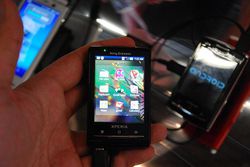 Découvert en janvier dernier sous le nom de Robyn et présenté comme une version miniature du modèle Xperia X10, le terminal Xperia X10 mini affiche les dimensions 8,3 x 5 x 1,6 centimètre pour un poids de 88 grammes.
Propulsé par un processeur Qualcomm MSM7227 à 600 MHz, il profite d'une compatibilité 2G / 3G / Wi-Fi et d'une interface LCD tactile capacitive 2,55 pouces en 16,7 millions de couleurs et dans une résolution 240 x 320 pixels avec traitement anti-rayure et accéléromètre pour la rotation de l'affichage.
À cela s'ajoutent une puce pour la navigation GPS associée au logiciel Wisepilot, un appareil photo numérique 5 Mégapixels avec autofocus, flash LED et fonction de géotagging, un lecteur multimédia, une radio FM avec fonction RDS, une sortie audio 3,5 millimètres, une mémoire interne de 128 Mo, un slot microSD / microSDHC acceptant les cartes de 16 Go ( carte 2 Go fournie ), un port microUSB 2.0 et une connectivité Bluetooth 2.1.
Quant à la batterie fournie, elle assure jusqu'à 4 heures en appels 2G, jusqu'à 3 heures et 30 minutes en 3G et jusqu'à 360 heures en veille. Ce n'est pas énorme quand on sait ce que peut proposer Sony Ericsson, mais difficile de caser une grosse batterie dans un si petit appareil. La miniaturisation se paie ici au prix de l'autonomie.

06/03/2010 14:13 par slaytane
Sony Ericsson Vivaz : smartphone tactile
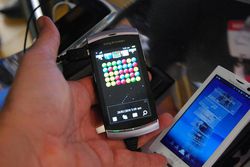 Aux dimensions, 10,7 x 5,2 x 1,2 centimètre pour un poids de 97 grammes, ce terminal affiche une compatibilité avec les réseaux mobiles 2G, 3G et Wi-Fi. Il offre une interface tactile résistive 3,2 pouces en 16,7 millions de couleurs et dans une résolution 360 x 640 pixels avec accéléromètre pour la rotation de l'affichage.
À son arsenal s'ajoutent une puce GPS associée au logiciel de navigation Wisepilot, un APN 8 Mégapixels avec autofocus, flash LED, détection des visages, détection des sourires et géotagging, un lecteur multimédia, une radio FM avec fonction RDS et une sortie audio 3,5 millimètres.
Et la liste s'allonge avec une mémoire interne de 75 Mo, un emplacement microSD / microSDHC acceptant les cartes mémoire d'une capacité de 16 Go ( une carte mémoire 8 Go est fournie ), un port microUSB 2.0 et une connectivité Bluetooth 2.1.
Le tout animé par un processeur PowerVR SGX Graphics cadencé à 720 MHz et alimenté par une batterie Lithium-Polymer 1 200 mAh procurant jusqu'à 13 heures en communications 2G, jusqu'à 5 heures et 20 minutes en 3G et jusqu'à 440 heures en veille.
Pour ceux qui s'en souviennent, il avait fait parler de lui au mois de novembre 2009 en tant que Kurara et il a été officialisé au mois de janvier 2010.
Sony Ericsson Vivaz Pro : presque le même avec un clavier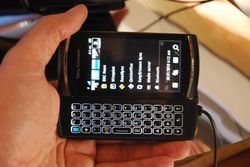 Visuellement, c'est le même appareil auquel on a ajouté un clavier complet pour la messagerie. Mais on note également quelques autres différences avec l'écran tactile qui bénéficie d'un traitement anti-rayures, l'appareil photo qui est équipé d'un capteur 5 Mégapixels et l'autonomie qui est un brin inférieure en communications ( réduite de 30 minutes pour la 2G et de 10 minutes pour la 3G ).
On l'avait découvert début janvier sous le nom de Kanna.
Commercialisation
Les smartphones Sony Ericsson Vivaz et Vivaz Pro seront disponibles au cours du premier et second trimestres 2010.

06/03/2010 14:09 par slaytane
Le modèle Desire : la version la plus complète Propulsé par une puce Qualcomm SnapDragon QSD8250 à 1 GHz accompagnée de 576 Mo de RAM, le modèle Desire ( anciennement connu sous le nom de Bravo lorsqu'il a été découvert en décembre 2009 ) affiche les dimensions 11,9 x 6 x 1,2 centimètre pour un poids de 135 grammes.
Compatible GSM / GPRS / EDGE quadribande 850 / 900 / 1 800 / 1 900 MHz, UMTS / HSDPA bibande 900 / 2 100 MHz et Wi-Fi 802.11 b / g, il offre une grande interface AMOLED tactile capacitive ( doigts ) 3,7 pouces affichant 16,7 millions de couleurs dans une résolution 480 x 800 pixels avec capteur de proximité pour éteindre l'interface tactile et accéléromètre pour la rotation de l'affichage.


HTC Desire au salon MWC 2010