
Nanami and Karina Get Teased by Designer Razec
06/03/2010 13:13 par slaytane


06/03/2010 13:13 par slaytane
In preparation of the 2010 Sony Ericsson concept phones on Esato, we get some teasers of the upcoming devices, courtesy of designer Razec. The first is Sony Ericsson Nanami, pictured below and probably being a touch cameraphone, “the revival of something exotic” and a… slider? (we’re only guessing).
Next up is Sony Ericsson Karina, pictured below, a “slim and neat” handset, that’s both compact and powerful, it seems to run a mystery flavour of Windows Mobile and features a bright touchscreen. There’s a HD inscription near the camera at the back, so we’re guessing the sensor is 8/12 MP and it comes with autofocus and serious flash power.
This slim device with Windows Mobile 7 (we’re guessing again) might be the ultimate XPERIA of 2010, although the handsets of this series have gone the Android way. I’d put a 1 GHz CPU under that case… Great teasers, Razec!

06/03/2010 13:09 par slaytane
While Nokia’s busy with readying a bunch of new smarphones and cameraphones, we have a look at a new concept bearing their branding, the Nokia Stealth. Created by Reginald Shola Hingston, this mid level handset is destined to reach the pockets of tech enthusiasts and you can learn what it’s all about after the break.
The Nokia concept comes with an ergonomically sculpted keypad, that allows the user to easily navigate by touch sensation, plus a rubberised matte textured surface, that absorbs light on radii, giving a feeling of flat facets. Nokia Stealth also uses a pearlescent matte coloring, that gives it a dark red hue, reminding us of radar lenses.
For more projects of this designer you can have a look at his Coroflot profile.

06/03/2010 13:06 par slaytane
Symbian went completely open source these days and we’ve also found out that the platform will be used on netbooks and tablets in the near future. This statement was made by Symbian Foundation CEO Lee Williams and one such “device of the future” is pictured below.
The portable gadget is part of Nokia “Vision of 2015″ video, shown after the break, below. This clip includes a bunch of concepts and prototypes made by the Finnish company, probably meant to feature Tegra 2 and OMAP4 solutions. Word has it that Symbian was already ported to the Intel Atom processor, in a project called Wild Duck.
Since Nokia’s Booklet 3G is real, should we also expect to see a Nokia Tablet in 1 or 2 years?

06/03/2010 13:03 par slaytane
There were a few Nokia fans who regretted the canning of the N-Gage gaming phone series, but there is still hope for this idea, specially if you believe in concepts. The folks of Recombu created the Nokia Ovi Orion, a gaming phone design, pictured below.
Nokia Ovi Orion looks like a combo between a Palm Pre and an iPhone, with a strange QWERTY keyboard and a hidden one line display at the back. This bizarre design might make gaming more user-friendly, but what’s really important is the front multitouch capacitive touchscreen, with a huge diagonal, hopefully.
We wouldn’t be surprised if a Tegra or Snapdragon CPU was on board too, as well as HDMI out and a decent bunch of speakers. The question is: does Nokia have the software platform for such a device? Here’s a short video demo of the concept gaming phone:

06/03/2010 13:01 par slaytane
It’s been a while since we last saw an eco-friendly concept phone, specially one with the Nokia branding on it. Thankfully, we’ve stumbled upon the work of designer Daizi Zheng, the original device pictured below, an eco-friendly Nokia phone powered by sugary drinks.
Daizi claims that the phone battery, used as a power source is too expensive and harmful for nature, specially in the disposal process. She has an alternative for normal batteries, that is the bio battery, an eco-friendly source of energy that uses carbohydrates (sugar in this case) and enzymes as the catalyst for the process needed to produce energy.
One pack of sugary drink will include enough carbohydrates for your phone to work, also generating water and energy, when the battery dies. Bio batteries have the potential to work three to four times longer with a single charge, compared to the Lithium batteries used today.
The idea is brilliant, but what about the handset’s design? How would you feel, carrying such a flask in your pocket

06/03/2010 12:59 par slaytane
Jon DeGorsky created a brand new Nokia concept phone, the M31, that impresses through its dual touchscreen displays. It seems that the handset is inspired by crop circles, in the visual department.
The two integrated displays are revealed after sliding the phone and you have to know that the top screen will show contacts, Internet browsing features, a mailbox, messaging functions, games, calendar and settings.
Nokia M31’s inner display provides the virtual numeric keyboard, also the interface changing bar and the “letter interface”. I can also spot a camera at the back of thehandset and all in all, the device is pretty good, albeit a tad too short for my taste.

06/03/2010 12:55 par slaytane
Symbian is going to push out S40 out of all but the most basic phones - the newly leaked Nokia C5 is good evidence of that. With a modest price tag this handset would steer many buyers in Symbian direction. The Nokia C5 is also the first phone of the Cseries we've seen yet - remember back in July last year when Nokia trademarked Xseries and Cseries? With the Nokia X3 and the Nokia X6 we saw the Xseries - the successors of the XpressMusic lineup - and now it's clear that the Cseries takes over where the "classic" phones left off. Here are the leaked specs for the Nokia C5 - it's powered by the non-touch Symbian S60 3rd edition FP2, the display is 2.2" QVGA, and the phone sports a 3.2MP camera with autofocus and LED flash, GPS receiver with A-GPS, a microSD card slot to expand the 50MB of built-in memory. The phone is 3G-enabled with HSDPA and HSUPA for fast Internet access. The Nokia C5 also offers a 3.5mm audio jack and FM radio. Basically, the C5 is like a 3G-capable Nokia 6303 classic with Symbian substituting the aging Series 40. We'll probably see more of the Nokia C5 at the MWC in Barcelona. 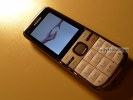
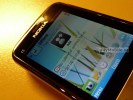
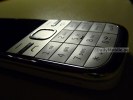
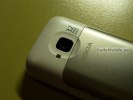
First look at the Nokia C5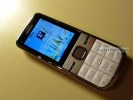
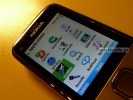
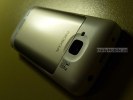
The Nokia C5 is pushing Symbian into S40 territory

07/02/2010 19:37 par slaytane
 Ce nouveau-venu chez le constructeur finlandais est en fait une évolution de son 6303 classic annoncé au mois de janvier 2009 et lancé quelques mois plus tard.
Il apporte une mémoire interne plus importante de 55 Mo au lieu de 17, une possibilité d'extension de cette mémoire plus intéressante avec 8 Go au lieu de 4 ( carte microSD de 2 Go fournie contre 1 Go auparavant ), le Bluetooth dans sa version 2.1 au lieu de 2.0 et enfin une amélioration de l'autonomie qui passe à 8 heures en appels au lieu de 7 et 515 heures en veille au lieu de 450.
Pour le reste, on retrouve la compatibilité GSM / GPRS / EDGE tribande 900 / 1 800 / 1 900 MHz, l'écran LCD 2,2 pouces affichant 16,7 millions de couleurs dans une résolution 240 x 320 pixels, l'appareil photo numérique avec capteur 3,2 Mégapixels, autofocus et double flash LED, le lecteur audio-vidéo, la radio FM avec fonction RDS,la sortie audio 3,5 millimètres et le port microUSB 2.0.
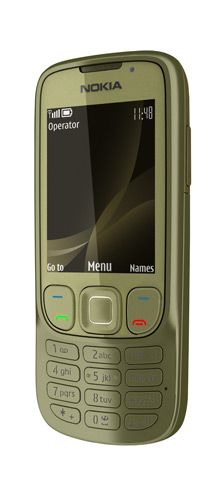
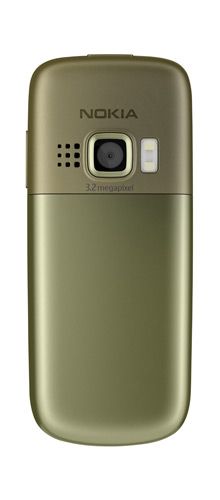
Vues avant et arrière du Nokia 6303i classic ( cliquer pour agrandir )
Le téléphone portable Nokia 6303i classic sera disponible d'ici la fin du premier trimestre et vendu aux alentours de 125 euros.

03/02/2010 18:05 par slaytane
 Découvert au mois de décembre 2009, ce smartphone sous environnement Windows Mobile 6.5 Pro s'est dévoilé plus en détail il y a peu, laissant apparaître un terminal de bonne facture sur le papier.
Propulsé par un processeur Qualcomm MSM 7227 à 600 MHz épaulé par 256 Mo de mémoire vive, il affiche une compatibilité GSM / GPRS EDGE quadribande 850 / 900 / 1 800 / 1 900 MHz, UTMS / HSDPA bibande 900 / 2 100 MHz et Wi-Fi 802.11 b / g.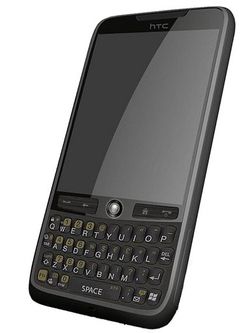 Son arsenal comprend également une interface LCD tactile résistive ( doigts et stylet ) 3 pouces gérant 65 536 couleurs dans une résolution 480 x 640 pixels, un trackball pour la navigation, un clavier complet pour la messagerie, un APN 5 Mégapixels avec autofocus et un lecteur audio-vidéo avec sortie audio 3,5 millimètres pour les écouteurs. Sans oublier d'évoquer sa mémoire interne de 512 Mo pour les données, son logement microSD / microSDHC pour les cartes mémoire jusqu'à 32 Go, son port microUSB 2.0 et sa connectivité Bluetooth 2.1.
Le tout dans un format relativement compact 12 x 6 x 1 centimètre et disponible en deux finitions bronze et noire.
Le smartphone HTC Trophy sera commercialisé à partir du second trimestre 2010. Reste à en connaître le prix, sur lequel rien n'a filtré pour le moment.

03/02/2010 18:01 par slaytane
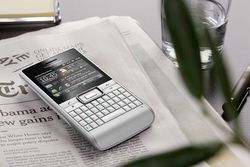 On l'avait aperçu il y a quelques jours sous le nom de code Sony Ericsson Faith mais le voici qui se dévoile officiellement : le smartphone Sony Ericsson Aspen vise un public plutôt professionnel avec le support de Windows Mobile 6.5.3 et un clavier de messagerie logé sous un écran tactile au format paysage.
Cet aspect apparaît également dans le fait qu'il appartient à la gamme Greenheart de mobiles conçus dans un souci de meilleur respect de l'environnement, ce qui pourra séduire la fibre écologique ( ou l'image de marque ) de certaines entreprises.
Caractéristiques
Qualifié de " business phone with a conscience " par Quentier Cordier, directeur marketing de Sony Ericsson, il joue de son interface riche et intuitive ( Spb Mobile Shell 3.0 ) et de ses outils de productivité pour attirer les professionnels.
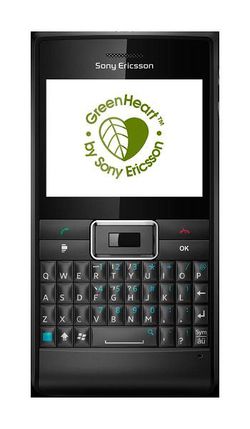
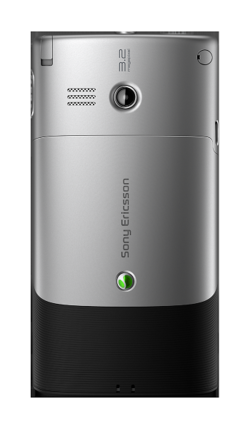
Le smartphone Sony Ericsson Aspen est un téléphone quadribande GSM / EDGE et bibande UMTS / HSPA doté des connectivités sans fil WiFi et Bluetooth, ainsi qu'un module A-GPS, d'une prise casque 3,5 mm et d'un port micro USB.
Il possède un affichage tactile 2,4" QVGA ( 240 x 320 pixels ), un APN 3,2 megapixels au dos et un port pour cartes mémoire microSDHC. Ses dimensions sont de 117 x 60 x 12,45 mm pour 130 g et l'autonomie annoncée est de 10 heures en communications GSM ( 8h en 3G ) et jusqu'à 600 heures en veille, ou 12 heures en lecture musicale uniquement.
Le Sony Ericsson Aspen sera disponible à partir du deuxième trimestre 2010 dans des coloris noir ou argenté à un prix non encore communiqué.